Blog

Your blog category

What Golf Really Costs Per Year

Green fees rose 29% since 2019 — but so did inflation, at 27%. The real annual cost of golf by play frequency, with NGF data and honest math. What Golf Really Costs Per Year: The 2026 Numbers Golf’s reputation as an expensive sport is both earned and overstated, and the data on which is which has gotten considerably better recently. The National Golf Foundation’s April 2026 analysis found public green fees rose about 29 percent between 2019 and 2025 — a real increase that golfers noticed. Over the same period, general US inflation rose about 27 percent. In other words, golf got more expensive at almost exactly the rate everything else did. By comparison, NGF notes the cost of attending an NFL game rose around 50 percent over the same six years, and movie ticket prices jumped roughly 60 to 75 percent depending on the measure used. This article breaks down what golf actually costs annually at different play frequencies, where the money goes, how sharply it varies by state and course type, which cost-reduction strategies produce real savings, and where the published averages are misleading. The Headline Numbers Metric Figure Source Average 18-hole public/daily-fee green fee ~$41 NGF, April 2026 Average public 18-hole fee including discounts ~$37 NGF (excluding resorts) National average weekday rate (course-level tracking) $51 GreenFeeTracker, 9,342+ courses Green fee increase, 2019–2025 ~29% NGF US inflation, same period ~27% NGF comparison Golf participation growth, 2019–2025 +41%, nearing 50 million participants NGF Why Published Averages Differ So Much The $37, $41, and $51 figures above all describe “the average green fee” and differ by nearly 40 percent. This is worth understanding rather than glossing over. NGF tracks published peak-time fees, which are not always what golfers actually pay — discounting for twilight rounds, replays, local resident rates, and seasonality is widespread. When discounts are accounted for, NGF’s figure drops to around $37. GreenFeeTracker’s $51 reflects confirmed weekday rack rates across 210 markets, which captures a different slice. The practical takeaway on averages No single average describes what you will pay. Published rack rates overstate typical spending because discounting is pervasive; discount-adjusted averages understate peak weekend costs. Your own number depends on when you play, where, and whether you book at rack rate or through discount channels. Annual Cost by Play Frequency This is the number most golfers actually want. Figures below cover the all-in round cost — green fee plus cart where applicable — and exclude equipment purchases, lessons, and membership dues. Play Frequency Rounds per Year Estimated Annual Spend Occasional (monthly) ~12 $500–$900 Twice monthly ~24 $1,700–$3,100 Weekly ~52 $4,000–$7,000 Twice weekly ~104 $8,000–$14,000 The spread within each row reflects course selection more than anything else. A weekly golfer playing municipal courses at $30 to $40 including cart lands near the bottom; one playing daily-fee courses at $70 to $90 on weekends lands near the top — same number of rounds, roughly double the cost. Where the Money Goes Green Fees and Cart Fees Green fees dominate ongoing cost. Cart fees are the line item rising fastest: green fees rose an average of 4.2 percent in 2025 — the slowest annual increase since 2019 — while cart fees climbed 7.8 percent, driven by battery replacement costs and labor shortages. Walking instead of riding saves between $25 and $150 per round depending on the course, which makes it the single most effective ongoing cost reduction available to a golfer who is physically able to walk. Weekday Versus Weekend Weekend rates typically run $10 to $30 higher than weekday rates at most public courses. The gap is widest at resort and daily-fee tracks, where weekend rates can be 30 to 50 percent above weekday pricing. Municipal courses often charge the same rate both days, which is part of why they represent such good value for frequent players. Equipment Equipment is front-loaded rather than recurring. A complete new starter set including a bag typically costs around $400, which makes the entry barrier lower than most non-golfers assume. For replacement clubs, certified pre-owned programs offer meaningful savings: a driver retailing at $549 commonly runs around $329 certified pre-owned with warranty transfer — roughly 40 percent off for equipment two to three years old that performs at or near current-model levels. Lessons Frequently treated as optional and arguably shouldn’t be. Research cited in NGF materials found players investing in four to six focused lessons in their first three months cut average round scores by around 12 strokes within six months and retained interest at nearly double the rate of those who did not. The retention finding matters financially: a golfer who quits after one season has spent money on equipment that produces no further value. Lessons that keep someone playing convert a sunk equipment cost into an ongoing hobby. State and Regional Variation Location is the largest cost variable outside play frequency. GreenFeeTracker data across 210 markets in 49 states puts the national average weekday rate at $51, with Illinois lowest at a $34 state average. The spread is substantial: resort destinations in states like Oklahoma and Nevada can run $150 or more on peak days, while municipal courses in the Midwest and South regularly offer rounds under $25. Regionally, the least expensive golf is concentrated in the Midwest and South. Resort golf has diverged most sharply from local golf — average resort green fees climbed about 37 percent since 2019, notably above the 29 percent public-course increase, and more than half of US golf resorts now carry peak-season rates above $100. The Resort Pricing Caveat Resort pricing is dynamic, with discounts tied to seasonality, time of day, replay rounds, and local or resident rates. In sunbelt states like Florida and Arizona, the spread between peak-season and off-peak summer pricing can be very wide when temperatures climb. A resort course at $180 in February may be $65 in July. Memberships: When the Math Works Private club membership is the largest potential cost in golf. Average initiation fees now exceed $12,000, with

What Golf Really Costs Per Year Read More »
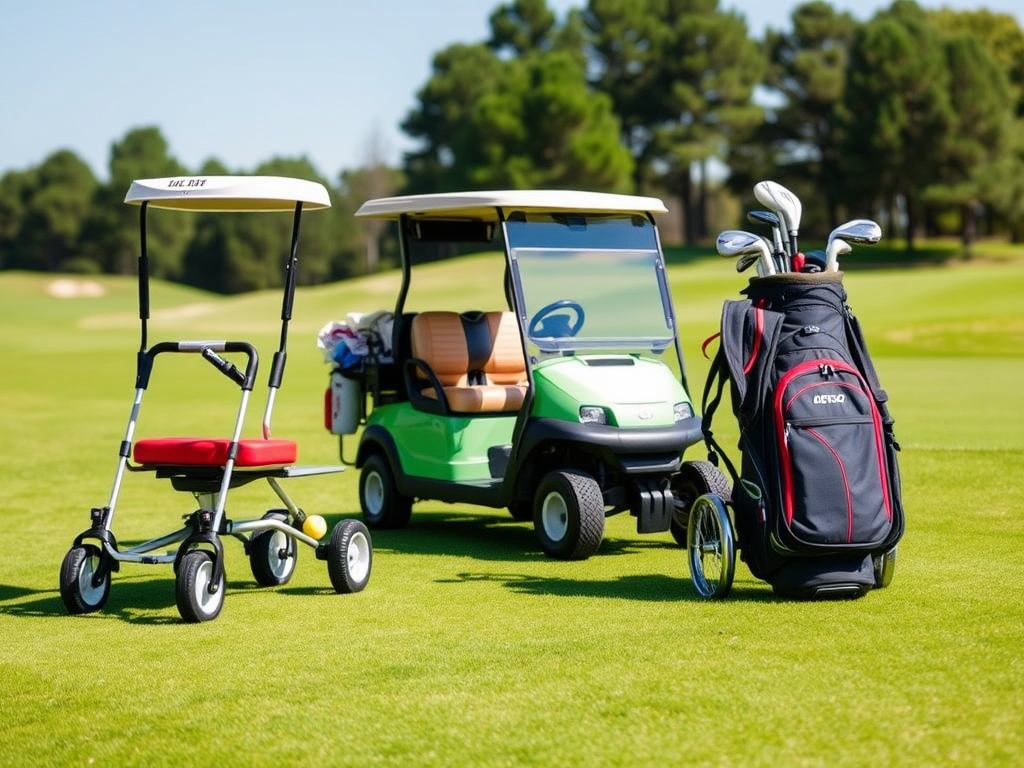
Push Cart vs Golf Cart vs Carry Bag: Honest Comparison

Push Cart vs Golf Cart vs Carry Bag: Honest Comparison

Push cart, riding cart, or carry bag? Real calorie data, scoring research, and cost math to help you choose how to get around the course Golf Push Cart vs Golf Cart vs Carry Bag: An Honest, Data-Backed Comparison How you move your clubs around eighteen holes is one of the few equipment decisions in golf that measurably affects three things at once: your health, your score, and your wallet. It is also one of the least examined. Most golfers default to whatever they started with — a carry bag from their beginner set, or a riding cart because that is what the course rents. The research on this is better than you would expect. Exercise physiologists have put golfers in VO2 masks and measured energy expenditure across all three modes. Golf associations have tracked scoring differences. And the results are not entirely what the marketing on either side would have you believe. This comparison covers what the studies actually found, where each option genuinely wins, the real cost math over one season and five seasons, and — importantly — the honest downsides of each. No option here is universally best, and anyone telling you otherwise is selling something. The Short Version If you… Choose Why Want maximum exercise with minimum joint strain Push cart Nearly the same calorie burn as carrying, without the shoulder and back load Play fast, carry little, walk short courses Carry bag Lightest option, no equipment to store or transport, cheapest by far Have mobility limitations, play in extreme heat, or need pace-of-play speed Riding cart Removes the physical barrier entirely; some courses mandate it Play 36 holes in a day or are recovering from injury Riding cart or electric push cart Fatigue management matters more than calorie burn over long days What the Research Actually Found The most frequently cited study on this question was conducted by the Colorado Golf Association in partnership with exercise physiologist Neil Wolkodoff. Ten golfers each played three separate nine-hole rounds — one with a push cart, one with an electric push cart, and one riding — while wearing VO2 measurement equipment. Calorie Burn by Transport Mode A separate frequently cited data set from the Rose Center for Health and Sports Sciences measured calorie expenditure across nine holes: Method Calories (9 holes) Relative to Riding Carrying your own clubs 721 +75% Push cart 718 +75% Walking with a caddie 613 +49% Riding in a motorized cart 411 baseline The finding that surprises most golfers Push cart: 718 calories. Carrying: 721 calories. That is a difference of three calories over nine holes — statistically meaningless. You get essentially the entire fitness benefit of carrying your bag while removing 15 to 30 pounds from your shoulders and back.   Other framings of the same underlying research put it differently: golfers walking with a push cart burn roughly 36 percent more calories per hour than those riding, with the gap widening over a full eighteen holes. Golf Digest’s coverage of the Wolkodoff study reported walkers burning almost 80 more calories per hour than riders. A Necessary Caveat on the Numbers Published calorie figures for golf vary enormously depending on methodology. A peer-reviewed review noted estimates for activity energy expenditure ranging from 531 to 2,467 kilocalories per eighteen holes — a nearly fivefold spread — attributed largely to differences in how researchers measured it. More conservative, ecologically valid measurements from Kasper et al. reported activity energy expenditure of roughly 650 to 750 kcal per eighteen-hole round, with no significant differences between carrying, push trolley, and electric trolley. That study did not include a riding group because it was conducted during a period when cart use was not permitted. The honest summary: walking clearly burns more than riding, and push cart is essentially equivalent to carrying. The precise numbers should be treated as directional rather than exact. The Scoring Data: Does Walking Actually Help Your Game? This is where the Wolkodoff study produced its most interesting finding. Over nine holes, scores relative to par broke down as follows: Transport Mode Score Over Par (9 holes) Self-Reported Mental Focus (of 10) Push cart 10.4 Higher than riding Electric push cart 10.2 6.63 Riding cart 11.5 5.01 Walkers finished roughly 1.1 to 1.3 strokes better over nine holes than riders, and rated their mental focus meaningfully higher. Wolkodoff’s own explanation was about decision-making rhythm: walking gives you time to think about the shot, rehearse it, and arrive at the ball prepared. In a cart you are holding on, then abruptly out and hitting. Where This Finding Needs Qualification A more recent peer-reviewed study on tournament golf raised the counterpoint honestly: cognitive benefits from walking may be offset by accumulated physical fatigue over eighteen holes or in demanding conditions. Fatigue has been separately linked to reduced shot consistency. Because lower activity energy expenditure means less physical fatigue, riding may help maintain physical readiness on long or hot rounds. The researchers’ own conclusion was that further research is warranted on the trade-off between cognitive and physical fatigue across transport modes. Anyone presenting the scoring benefit of walking as settled science is overstating it — the nine-hole finding is real, but the eighteen-hole and tournament picture is genuinely more complicated. Option 1: The Carry Bag How It Works A stand bag with dual shoulder straps, typically weighing 4 to 6 pounds empty and 20 to 30 pounds fully loaded with fourteen clubs, balls, water, and accessories. Where It Genuinely Wins Cost is the obvious one — you need a bag regardless, so this option adds nothing. Speed is the second: no equipment to unfold, maneuver around bunkers, or navigate through narrow gaps. On tight, walkable municipal courses, a carrying golfer often moves faster than a push cart golfer. Storage and transport also matter more than people expect. A carry bag fits in any trunk. A push cart takes up meaningful space, and folding and unfolding it every round becomes a small tax on your time. The Honest Downsides Twenty

Push Cart vs Golf Cart vs Carry Bag: Honest Comparison Read More »

Golf Statistics Every Player Should Know — golfer mid-swing on a fairway with distance markers visible

Golf Statistics Every Player Should Know

Golf Statistics Every Player Should Know: The 2026 Data That Actually Improves Your Game Most golfers have a rough sense of whether they are good or bad, but very little sense of where specifically they are losing strokes. They assume it is the driver, because that is the shot that feels most dramatic when it goes wrong. The data says otherwise, and it says so consistently. This article pulls together the numbers that matter from USGA handicap data, Shot Scope and Arccos tracking data, and PGA Tour statistics for 2026. It covers what the average golfer actually shoots, how far players at each handicap level actually drive it, how distance declines with age, and — most importantly — the statistical gap between amateurs and professionals, which turns out to be located somewhere most amateurs never practice. Scoring: What the Average Golfer Actually Shoots Start with the number everyone wants to know. Player Category Average Score (Par 72) Notes PGA Tour professional 69–70 Roughly 20 strokes better than the typical amateur Amateur with official handicap 90–92 Based on USGA handicap data Casual golfer (no tracked handicap) 95–110 Self-reported and estimated The Breaking-90 and Breaking-80 Reality Two figures put amateur golf in perspective more clearly than any average: Milestone Share of Golfers Who Achieve It Consistently Break 90 ≈25% Break 80 Fewer than 5% Three quarters of golfers do not consistently break 90. Ninety-five percent do not consistently break 80. If you are shooting in the 80s regularly, you are already in the top quarter of players — a fact that surprises many golfers who measure themselves against televised professionals rather than against the actual population. The 20-stroke gap The average amateur shoots 90 to 92. The average tour professional shoots 69 to 70. Understanding where those 20 strokes actually come from is the single most useful thing an improving golfer can learn, and the answer is not what most players assume. Driving Distance: The Stat Everyone Overrates Driving distance is the most-discussed statistic in golf and one of the least correlated with scoring among amateurs. But the data is worth knowing, both for benchmarking and for understanding why it matters less than it feels like it should. PGA Tour Distance in 2026 Metric 2026 Figure PGA Tour average driving distance 303 yards Longest on Tour (Aldrich Potgieter) 328 yards Shortest on Tour (Brandt Snedeker) 281 yards LPGA Tour average ≈256 yards For historical context: the current shortest hitter on the PGA Tour at 281 yards would have ranked among the ten longest players on Tour thirty years ago. The 100th-ranked player now averages around 300 yards, compared to 255.5 yards for the 100th-ranked player in 1980 — an increase of roughly 17.5 percent over four decades. Amateur Distance by Handicap Two major tracking systems — Shot Scope and Arccos — collect distance data from hundreds of thousands of amateur rounds. Their figures differ slightly due to methodology but tell the same story. Handicap Level Average Driving Distance Gap vs. PGA Tour Average Scratch (0 handicap) 285 yards (Shot Scope) / 244 yards (Arccos overall) −18 yards 5 handicap 261 yards −42 yards 10 handicap 259 yards −44 yards Average amateur (all handicaps) 245 yards (Shot Scope) / 224.1 yards (Arccos) −58 to −79 yards Notice something important in that table: the difference between a 5-handicap and a 10-handicap is two yards. Both are roughly 15 yards behind a scratch player. Distance is clearly not what separates a 5 from a 10 — those five strokes come from somewhere else entirely. Amateur distance is also increasing The average amateur now drives the ball around 245 yards according to Shot Scope data, which is roughly 32 yards further than the 2016 average reported by the USGA. Equipment technology, better fitting, and increased attention to swing speed training have all contributed — and the trend is a significant part of why the golf ball rollback has become one of the sport’s most debated topics. How Distance Changes With Age Arccos data tracks distance across age brackets, and the decline is steady and consistent. Age Bracket (Men) Average Driving Distance 20s Highest bracket in the dataset 50s 219 yards Oldest bracket ≈50 yards below the youngest bracket Roughly 50 yards separates the youngest and oldest male golfers in the Arccos dataset. The primary mechanism is swing speed loss, which is gradual but steady without deliberate intervention. The Age Decline Is Not Inevitable This is one of the more actionable findings in the data. Overspeed training protocols — systems like SuperSpeed Golf and The Stack System — can offset age-related speed decline. Many golfers in their sixties maintain or even add clubhead speed with consistent training. The decline in the aggregate data reflects the average golfer doing no speed work at all, not a hard physiological limit. Also worth noting: losing weight without strength training often costs power rather than adding it. Adding muscle, mobility, and speed-specific training is what maintains distance with age. Where Amateurs Actually Lose Strokes This is the most important section of this article, because it contradicts what most amateurs believe about their own games. The Full Swing Is Not the Bottleneck According to PGA Tour statistics, the difference in driving distance between a tour player and a 10-handicapper is only about 30 to 40 yards. Approach accuracy differs significantly, but not as dramatically as most players assume. Where tour professionals absolutely dominate amateurs is inside 100 yards. Skill Tour Professional 15-Handicap Amateur Stroke Impact Up-and-down conversion rate ≈60% ≈20% Enormous around the green Three-putt frequency About once every 36 holes 3–4 times per round 6–8 strokes per round The single most useful number in this article Three-putting alone accounts for 6 to 8 strokes per round for a 15-handicapper compared to a tour professional. That is roughly a third of the entire 20-stroke gap, coming from one specific, entirely practicable skill — and it requires no additional clubhead speed, athleticism, or equipment.   What This Means for Practice Allocation Most

Golf Statistics Every Player Should Know Read More »

Best Golf Gifts Under $50 for Men in 2026 — golf accessories gift set with balls tees glove and hat on a putting green

Best Golf Gifts Under $50 for Men in 2026

Find the best golf gifts under $50 for men in 2026. From custom balls to putting mats, these 12 affordable picks make any golfer’s day. Best Golf Gifts Under $50 for Men: 12 Affordable Picks Any Golfer Will Love in 2026 Shopping for a golfer on a budget doesn’t mean settling for a generic gift they’ll never use. The best golf gifts under $50 are the ones that genuinely improve their game, make their time on the course more comfortable, or add a personal touch they wouldn’t buy for themselves. Most golfers already own the big-ticket items — clubs, bags, shoes — which means it’s the smaller accessories and tools they use every single round that make the best gifts. Whether you’re shopping for a birthday, Father’s Day, holiday, retirement, groomsmen gift, or just because, this guide covers 12 golf gifts under $50 organized by category — on-course accessories, comfort and style, practice tools, and fun personal items — with price ranges, who each gift is best for, and honest notes on what’s worth buying versus what ends up in a drawer. On-Course Accessories These are the items a golfer uses every single round. They’re small, practical, and get replaced or lost often enough that receiving a quality version as a gift is always appreciated. 1. Magnetic Golf Towel A microfiber golf towel with a built-in magnet that snaps to the golf cart frame is one of those simple upgrades that golfers love once they have it. Traditional clip-on towels fall off, get lost, and require reaching down to the bag. A magnetic towel stays exactly where you put it, detaches with one hand to clean a club face or wipe a ball, and snaps right back. The microfiber material cleans better than cotton, dries faster, and holds up to machine washing. At $10 to $18, this is one of the most useful and least expensive gifts on this list, and it’s the kind of thing most golfers wouldn’t think to buy for themselves because their current towel “works fine” — until they use a better one. Price range: $10-$18 | Best for: Any golfer who plays regularly 2. Premium Divot Repair Tool with Ball Marker Every golfer is supposed to repair their divots on the green, but cheap plastic tools bend, break, and get lost constantly. A quality metal divot tool — stainless steel or brass — with a detachable magnetic ball marker is a small luxury that lasts years. Many options allow engraving (initials, a date, a short message), which turns a $15 tool into a personalized keepsake without adding much cost. This is an especially good gift for golfers who play frequently at nicer courses where green etiquette matters — pulling out a beautiful metal divot tool instead of a plastic freebie from a tournament bag makes a subtle impression. Price range: $12-$25 | Best for: Golfers who care about course etiquette and personal touches 3. Golf Alignment Sticks Alignment sticks are thin, lightweight fiberglass rods that tour professionals use on the practice range to check aim, swing path, and ball position. They’re arguably the single most effective practice aid in golf, recommended by virtually every teaching pro, and they cost almost nothing. A pair of alignment sticks transforms a mindless bucket of range balls into a focused, productive practice session. Despite being universally recommended by instructors, most amateur golfers don’t own a pair because they don’t think of buying them for themselves. That gap between usefulness and awareness is what makes them an excellent gift — the recipient will actually use them, and they’ll think of you every time they do. Price range: $10-$20 | Best for: Golfers serious about improving Comfort and Style Golfers spend four to five hours outdoors in a single round. Comfort gear that handles sun, heat, and sweat makes a bigger difference to the experience than most non-golfers realize. 4. Performance Golf Hat A moisture-wicking, UV-protection golf cap with a structured brim and breathable mesh panels is something every golfer wears but rarely splurges on for themselves. Most golfers are still wearing a promotional hat they got free at a corporate outing three years ago. A well-made performance hat in a clean, modern design — solid colors, minimal branding — is an immediate wardrobe upgrade they’ll reach for every round. Look for hats with adjustable closures (snapback or Velcro) rather than fitted sizes unless you know the recipient’s exact head measurement. UPF 50+ fabric is ideal for sun protection during long summer rounds. Price range: $20-$35 | Best for: Golfers who play in warm weather 5. Polarized Golf Sunglasses Polarized lenses reduce glare off the fairway, water hazards, and sand bunkers, and they genuinely help golfers read greens better by enhancing contrast and depth perception. Most golfers either don’t wear sunglasses at all (because their current pair sits too loosely and shifts during the swing) or wear fashion sunglasses that aren’t designed for sport. Buy best golf sunglasses from that list- Budget-friendly sport sunglasses with polarized lenses, UV protection, rubber nose grips, and lightweight wraparound frames are available in the $20 to $40 range from brands like Goodr, Knockaround, and Sundog. These won’t slide during the swing, which is the main reason golfers avoid sunglasses in the first place. There is lot of benefit of wearing golf sunglasses. Look more benefits from this amazing article- Golf benefits Price range: $20-$40 | Best for: Golfers in sunny climates 6. Compression Golf Socks Walking 18 holes covers four to five miles of terrain over three to four hours. By the back nine, most golfers’ feet and calves are fatigued, which affects balance and swing consistency. Compression golf socks reduce muscle fatigue, improve circulation, and provide cushioning in the heel and ball of the foot. A three-pack of quality golf-specific compression socks runs $15 to $25 and makes a noticeable difference in comfort during the final holes of a round. This is a particularly thoughtful gift for golfers who walk the course rather

Best Golf Gifts Under $50 for Men in 2026 Read More »

A lush green golf course with a serene lake, sand bunker, and tree-lined fairways, with the text 'Relationship Between Golf Courses and Local Ecosystems' displayed prominently.

The Relationship Between Golf Courses and Local Ecosystems

Discover how golf courses and local ecosystems affect one another. Learn 10 key relationships – from wildlife habitats and water use to sustainability – explained in simple terms. Golf Courses and Local Ecosystems – 10 Ways, They Impact Each Other When you picture a golf course, you might imagine neatly cut grass, sand bunkers, and ponds. But did you know a golf course is also part of the local ecosystem? In fact, the relationship between golf courses and local ecosystems can be surprising. Golf courses aren’t just places to play – they can provide homes for wildlife, use lots of water, and even affect the soil and air around them. In this article, we’ll explore 10 key ways golf courses interact with nature. Each section is written in a friendly, easy tone so that even a 7th-grader can understand. Let’s tee off and learn how golf and nature are connected! 1. Golf Courses as Wildlife Habitat Golf courses often serve as green spaces where animals can live. Many courses have trees, bushes, and ponds that attract birds, insects, and small mammals. Fairways and rough areas can become home to creatures like birds, rabbits, or even deer. For example, some golf courses leave sections of land unmoved (not cut short) so wildflowers can grow, and bees and butterflies have food. In urban areas, a golf course might be one of the only big green habitats for wildlife. According to the USGA, golf courses provide important habitats for native wildlife and can even support threatened species. This means a well-managed course can act like a park or nature reserve for local animals. Deer grazing on a quiet golf course. Golf courses can provide a refuge for wildlife like deer, especially in early mornings or evenings when the course is calmer. Animals often find food, water, and shelter on golf course grounds, showing a positive side of the relationship between golf courses and local ecosystems. Tip: If you’re golfing and see wildlife, give them space. Enjoy watching them from a distance. This keeps both you and the animals safe. 2. Impact on Local Plant Life (Flora) The grass on a golf course isn’t always native to the area. Courses sometimes plant special turfgrass that needs regular care. On the plus side, all that grass and landscaping means a lot of plants doing good things: plants produce oxygen, provide shade, and prevent erosion (stopping soil from washing away). Trees on a course can create cooling shade and homes for birds. However, if a golf course replaces native plants with non-native grass, it might reduce biodiversity (variety of plants). Ideally, courses use a mix of native trees and plants in their landscaping, which keeps the ecosystem healthier. Some golf courses even keep wild areas or gardens with native flowers to support bees and other pollinators. Using native plants means less need for water and chemicals, because these plants are adapted to the local environment. In short, the plants on a golf course can either help or hurt the local ecosystem depending on how they’re chosen and managed. 3. Water Use: Thirsty Greens and Water Conservation Golf courses need water – a lot of it – to keep the grass green. How much water do golf courses use? In dry regions, you might see sprinklers running often. All U.S. golf courses combined use about 1.5 billion gallons of water per dayusga.org, which is roughly 0.5% of the country’s daily water useusga.org. That sounds huge, and in some areas it can strain (use up) local water supplies. Courses often draw water from wells, rivers, or recycled wastewater to irrigate (water) the turf. The good news is many golf courses are finding ways to save water, such as watering only at night to reduce evaporation and using smart computer systems to water only when needed. Drought-resistant grass varieties and rainwater storage ponds are other tools for water conservation. In fact, water use on U.S. courses dropped about 29% from 2005 to 2020 thanks to these effortsusga.org. The relationship with local water systems is delicate: too much water use can hurt rivers and lakes, but careful management can minimize the impact. A serene pond alongside a golf course at sunset. Water hazards and ponds on golf courses aren’t just for challenging play – they’re often part of the local watershed. These ponds can catch and filter rainwater runoff, helping to manage storm floods and provide habitat for fish, frogs, and birds. Some golf course ponds even become homes for ducks and turtles, blending the course into the local ecosystem. Tip: Golfers can help save water by not overwatering practice greens at home and supporting courses that use recycled or reclaimed water for irrigation. 4. Chemical Use: Fertilizers and Pesticides To keep golf courses looking perfect, groundskeepers use chemicals like fertilizers (to help grass grow) and pesticides (to kill weeds, insects, or fungi). While these chemicals make the course pretty and playable, they can pose risks to the local ecosystem. If it rains, excess fertilizer can wash off into nearby streams or ponds, causing algae blooms (too much algae growth) that harm fish and water quality. Pesticides can also runoff or seep into groundwater. Environmental groups warn that many golf courses store a “toxic assortment” of chemicals that can drift in the air, seep into ground water, and even hurt local wildlife. These chemicals might even affect people (like golfers or maintenance workers) if not handled carefully. On the bright side, many courses are adopting safer practices. Some are switching to organic fertilizers or Integrated Pest Management (IPM), which means using natural methods first and chemicals only as a last resort. Courses are also very regulated – in the U.S., many pesticides can only be applied by trained, licensed staffusga.org. Plus, modern golf turf is often designed to absorb chemicals better. Research has shown that healthy turfgrass with deep roots can trap and break down chemicals, limiting how much ends up escaping into the environmentusga.org. The key is balance:

The Relationship Between Golf Courses and Local Ecosystems Read More »

A pristine putting green surrounded by a sand bunker and lush fairway, with the text 'What You Need to Know About Golf Course Maintenance' on top, set against a bright blue sky and rolling green landscape.

What You Need to Know About Golf Course Maintenance

Discover 10 essential things about golf course maintenance – explained in simple terms, from daily mowing and watering to fixing divots and more. What You Need to Know About Golf Course Maintenance – 10 Essential Tips and Facts Have you ever wondered how golf courses stay so green and perfect? It turns out a golf course needs a lot of care and hard work every day. In fact, golf course maintenance is a never-ending job, because a golf course is like a living organism that needs constant attention. From early morning mowing to late afternoon watering, a dedicated team of groundskeepers works behind the scenes to keep the course healthy and enjoyable. This article will walk you through the 10 things you need to know about golf course maintenance. We’ll explain each part in simple terms, so even a 7th grader can understand. By the end, you’ll appreciate the tremendous effort that goes into keeping those fairways and greens in top shape. A dedicated groundskeeper cleaning a mower at the course’s maintenance facility. Golf course maintenance involves many behind-the-scenes tasks like this. The maintenance facility is like the course’s garage, where all the mowers and tools are stored and serviced daily. Keeping the equipment clean and in good shape is essential for the crew to do their job effectively. Why Golf Course Maintenance Matters Golf course maintenance isn’t just about looks – it’s about making sure the course is safe, fair, and fun to play on. Well-maintained turf ensures the golf ball rolls smoothly on the greens and bounces predictably on the fairways. Good maintenance also keeps the grass healthy and strong, which helps prevent weeds and damage. Plus, caring for a golf course protects the club’s big investment in the landscape. Many courses spend hundreds of thousands of dollars each year on upkeep, including things like mowing, watering, sand trap care, and more. In fact, labor (the work the maintenance crew does) makes up about 50–60% of those maintenance costs. Without regular golf course maintenance, a beautiful golf course could quickly turn brown, bumpy, and unplayable. Tip: Next time you’re on the course, take a moment to notice how smooth the greens are or how neatly the bunkers are raked. That’s all thanks to the golf course maintenance crew’s hard work! Top 10 Things to Know About Golf Course Maintenance Let’s explore ten key aspects of golf course maintenance. These are the main tasks and factors that keep a golf course in great condition year-round. We’ll also compare these tasks side by side later on, so you can see how often they’re done and why each is important. 1. Daily Mowing of Greens and Fairways What it is: Mowing is the most basic (and most important) part of golf course maintenance. The grass on a golf course – especially on the putting greens – is kept very short. Groundskeepers use special mowers to cut the grass almost every day. On greens, the grass might be cut as low as about 0.125 inches (one-eighth of an inch) short! Keeping grass this short and smooth helps golf balls roll true when you putt. Why it matters: If the grass gets too long or uneven, putts and shots won’t go straight. Daily mowing ensures a fast, smooth putting surface and well-manicured fairways. It also creates those satisfying stripe patterns you see on golf course lawns. Frequent mowing actually makes the turf grow in thicker and healthier over time (similar to how a haircut can make hair seem thicker). By trimming a little bit each day, the crew keeps the grass at the ideal height without stressing it too much. How it’s done: Greens are usually mowed in the early morning before golfers start playing. Groundskeepers often use lightweight walk-behind mowers or small riding mowers that are specially designed for greens. Fairways and rough (the longer grass areas) are cut a bit higher and may be mowed a few times a week instead of daily. The mowers have very sharp blades to ensure a clean cut. In some cases, greens are also rolled with a heavy roller machine after mowing to make them extra smooth. Tip: Ever wonder why you sometimes see golf course maintenance workers mowing at sunrise? Golf courses often mow early in the day to avoid disrupting players and to give the grass a fresh cut before play begins. 2. Watering and Irrigation What it is: Just like any lawn or garden, golf courses need water. Proper golf course maintenance includes careful irrigation planning to give each part of the course the right amount of water. Irrigation is the system of sprinklers and hoses that water the grass. Golf course irrigation is carefully scheduled and controlled so that each part of the course (greens, tees, fairways, etc.) gets the right amount of water. Modern courses often use computer-controlled sprinkler systems that can be set to water during the night or early morning hours. Why it matters: Grass needs water to stay green and healthy. Too little water and the grass dries out and turns brown; too much water and the grass can drown, or fungus might grow. A good watering plan keeps the turf strong and prevents dry spots on greens that could affect the roll of the ball. Watering is usually done deeply but infrequently – meaning they soak the ground thoroughly, then wait a bit before the next watering. This encourages grass roots to grow deeper, making the turf more resilient. How it’s done: Many golf courses water early in the morning (often before dawn) or late in the evening. This is because watering during the hot midday sun can waste water (due to evaporation) and can even harm the grass (water droplets in strong sun can scorch leaves). Courses have large underground pipes and sprinkler heads across all areas. It’s a huge job – an average 18-hole golf course (around 150 acres) might use about 200 million gallons of water per year for irrigation. To save

What You Need to Know About Golf Course Maintenance Read More »

A scenic view of a public golf course in Virginia’s Shenandoah Valley, featuring lush fairways, a sand bunker, and distant mountains with the text 'Top Public Golf Courses in Virginia’s Shenandoah Valley' in bold.

Golfing in Virginia’s Shenandoah Valley: Top 10 Courses

Discover 10 top golf courses in Virginia’s Shenandoah Valley. Compare scenic views, challenge levels, and amenities to plan an unforgettable golf trip. Golfing in Virginia’s Shenandoah Valley: 10 Best Courses for an Unforgettable Round Golfing in Virginia’s Shenandoah Valley is a treat for anyone who loves scenic mountain views and well-designed courses. This region boasts lush fairways set against the Blue Ridge and Allegheny Mountains, creating a breathtaking backdrop for your game. Even a newcomer to golf can appreciate the beautiful landscapes and fresh country air here. In this guide, we’ll explore the 10 best golf courses in the Shenandoah Valley, comparing their scenery, difficulty, and amenities side by side. Whether you’re a seasoned player or a beginner, these courses promise fun and memorable golfing experiences. Let’s tee off on our adventure through the Valley’s finest golf destinations! Why Golf in the Shenandoah Valley?Golfers flock to the Shenandoah Valley for its unique combination of natural beauty and golfing variety. The valley offers: Tip: Summer afternoons can get hot in the Valley. Stay hydrated and keep cool during your round by wearing a breathable sun hat and drinking plenty of water. (It helps to stay cool during your round of golf with proper hydration and gear!) Now, let’s dive into the 10 best golf courses in Virginia’s Shenandoah Valley. For each course, we’ll highlight what makes it special – from scenic views to difficulty level – so you can find the perfect spot for your next tee time. Top 10 Golf Courses in the Shenandoah Valley 1. Shenandoah Valley Golf Club – Front Royal, VA Overview: This historic 27-hole golf club (recently reconfigured into two 18-hole courses) is often called the “premier public golf course” in the Valley. In fact, Golf Digest named it one of the 10 best places to play golf in Virginia, and it’s easy to see why. The club sits at the base of the Blue Ridge and Massanutten Mountains, so nearly every hole has a postcard-worthy view. Why Play Here: Shenandoah Valley Golf Club offers bold, traditional course design with perfectly manicured greens. The layout is challenging enough for experienced players but still friendly to newcomers learning the game. With two distinct 18-hole courses (the Old Course and the Titus Course), you get variety and 36 holes of golf in one location. The club also features a top-rated Virginia Golf School on-site for those looking to improve their swing. Highlights: Did You Know? Shenandoah Valley Golf Club’s facility has been ranked among the top 10 in Virginia for public golf. It’s also just a 45-minute drive from the D.C. area, making it a perfect daytrip for city golfers who crave country scenery. 2. Rock Harbor Golf Course – Winchester, VA Overview: Rock Harbor is a 36-hole complex featuring two distinct 18-hole courses: the Rock Course and the Boulder Course. Built adjacent to a quarry, Rock Harbor cleverly incorporates massive boulders and water features into its design. The result is a one-of-a-kind golf experience that is challenging, scenic, and fun. Why Play Here: If you love a good challenge and unique course design, Rock Harbor is a must. The Boulder Course is considered the more difficult of the two, with significant elevation changes and large, multi-tiered greens that will test your putting skills. The Rock Course is slightly more forgiving but still requires your “A-game” on many holes. Both courses are beautifully maintained and offer views of the surrounding valley countryside. Highlights: Tip: When tackling Rock Harbor’s hilly fairways, consider using a cart or a comfortable lightweight golf bag for walking. This will save your energy for those long drives and uphill putts! 3. Shenvalee Golf Resort – New Market, VA Overview: Shenvalee is a charming golf resort that has been welcoming players since 1927. It features 27 PGA-sanctioned holes split into three 9-hole courses (the Olde, Miller, and Creek nines). Every 18-hole round here is a combo of two nines, giving you six different course combinations to play – variety galore! With an on-site 42-room motel and a restaurant, Shenvalee is perfect for a golf weekend getaway. Why Play Here: Shenvalee offers a relaxing resort vibe with golf suitable for all levels. The fairways are generally forgiving, and the greens are well-kept and true. Experienced golfers will enjoy the strategic challenges (like the occasional long par-4 over water), while beginners appreciate the friendly atmosphere and moderate difficulty. It’s the kind of place where you can play a morning round, have lunch overlooking the course, then head out for another round on a different nine. Highlights: Did You Know? Shenvalee Golf Resort is blessed with fall colors every year, as the surrounding valley forests turn bright orange and red. Playing here in October is a visual treat – you’re golfing in the middle of a living postcard! 4. Heritage Oaks Golf Course – Harrisonburg, VA Overview: Heritage Oaks is an 18-hole municipal course owned by the City of Harrisonburg. This par-70 course is known for its picturesque setting and player-friendly design. It’s a shorter course (just over 6,300 yards from the back tees), making it ideal for a casual round or for those still learning the game. Don’t let the yardage fool you, though – Heritage Oaks has a mix of links-style open holes and traditional tree-lined holes to keep things interestingfacebook.com. Why Play Here: If you’re looking for a relaxed, affordable round, Heritage Oaks is the place. It’s great for families, juniors, or anyone who wants to enjoy golf without too much difficulty. The front nine is more open and forgiving, offering good scoring opportunities. The back nine gets tighter and more challenging with trees and a few water hazards coming into playfacebook.com. This progression makes the course fun for improving your skills – you ease in, then face tougher shots later in the round. Highlights: Tip: Because Heritage Oaks is shorter, it’s a perfect course to walk for exercise. Walking an 18-hole round here is pretty comfortable. Just remember to carry a bottle of

Golfing in Virginia’s Shenandoah Valley: Top 10 Courses Read More »

A serene golf resort at sunrise, showcasing vibrant fairways, manicured putting greens, and a classic resort building nestled among mature trees, offering lodging and golf in North Carolina.

10 Best Golf Courses with Lodging in North Carolina

Plan the ultimate golf getaway! Discover North Carolina’s 10 best golf courses with on-site lodging. Enjoy award-winning courses, cozy resorts, stay-and-play packages, tips, and more (for golfers of all ages). Golf Courses with Lodging in North Carolina: Top 10 Stay & Play Resorts Looking for the perfect golf vacation? North Carolina offers some of the best golf courses with lodging in the countrygolfpass.com. From the sandhills to the mountains and coast, you can stay and play at amazing resorts that cater to golfers and families alike. This guide will walk you through the top 10 golf courses in North Carolina that offer on-site accommodations, so you can roll out of bed and onto the fairway! Why North Carolina for a Golf Vacation? North Carolina is a golfer’s paradise, boasting mild weather for year-round play and diverse landscapes ranging from rolling sandhills to Blue Ridge Mountains and sunny beachesgolfpass.com. The state’s “Home of American Golf” is Pinehurst, a legendary destination with multiple courses and historic hotelsgolfpass.com. But beyond Pinehurst, you’ll find many other golf resorts across NC offering stay-and-play packages, family-friendly amenities, and championship courses designed by top architects. Whether you’re a scratch golfer or a beginner, North Carolina’s golf resorts promise fun, relaxation, and challenge in equal measure. (And yes, even a 7th grader can appreciate the fun of a mini-vacation at these beautiful places!) Pro Tip: For the best experience, visit in spring or fall when the weather is comfortable. Also, check each resort’s stay-and-play packages for bundled deals on lodging and green fees – it can save you money while maximizing your golf time! Top 10 North Carolina Golf Courses with Lodging Below we’ve listed the 10 best golf courses in North Carolina that offer lodging right on site. For each, we’ll cover what makes it special – the golf, the accommodations, amenities – and how they compare on key factors like price and reviews. Let’s tee off! 1. Pinehurst Resort – Pinehurst, NC The historic Carolina Hotel at Pinehurst Resort, known as the “Queen of the South,” offers luxurious lodging right by the courses. About the Resort: Pinehurst is often ranked the #1 golf resort in America, and for good reasongolfdigest.com. Established in 1895, Pinehurst Resort features nine 18-hole golf courses – including the famed Pinehurst No. 2, host of the 2014 U.S. Opengolfdigest.com. The resort village exudes Southern charm and is nicknamed the “Home of American Golf.” Golf legends have walked these fairways, and Pinehurst No. 2 is known for its fast, undulating greens that challenge even proscharlottesgotalot.com. Lodging: Guests stay in historic hotels like the grand Carolina Hotel (230 rooms), the Holly Inn, or the Manor Innhistorichotels.org. There are also condos and new golf cottages, so families and groups have plenty of spacehistorichotels.org. A complimentary shuttle connects you around the sprawling 2,000-acre propertyhistorichotels.org. You’ll enjoy luxury amenities: a world-class spa, pools, tennis, multiple restaurants, and even an 18-hole putting course called “Thistle Dhu” historichotels.org. Golf & Amenities: With 9 courses on-site, you can play a new course each day. Pinehurst No. 2 is the crown jewel (designed by Donald Ross) and has hosted numerous championshipsgolfdigest.com. There’s also The Cradle, a fun 9-hole short course perfect for beginners or an evening stroll with a putter. Off the course, indulge in the resort’s fine dining and the famous breakfast buffet, relax at the elegant spa, or explore the quaint Village of Pinehurst with its shops and historic tourshistorichotels.org. At a Glance: Why Pinehurst? If you want the ultimate golf getaway, Pinehurst is hard to beat. You’ll walk in the footsteps of champions and enjoy five-star hospitality. It’s expensive, but as one guest said, “This place is worth the hype… a dream come true”charlottesgotalot.com. Pinehurst combines world-class golf with a luxury vacation experience. 2. Pine Needles Lodge & Golf Club – Southern Pines, NC About the Resort: Pine Needles Lodge & Golf Club is a historic Sandhills retreat that oozes classic golf charm. It features an 18-hole Donald Ross-designed course that has hosted the U.S. Women’s Open four times (most recently in 2022)golfdigest.com. The course was lovingly restored to Ross’s original vision, making it both challenging and fun for today’s golfers. Pine Needles is often praised for its immaculate course conditions and timeless ambiance – you feel like you’ve stepped back to golf’s golden era, but with modern hospitality. Lodging: The Lodge at Pine Needles offers 74 cozy guest rooms overlooking the coursegolfpass.com. Accommodations are in low-rise lodges and chalet-style cottages nestled among the pines, so you’re always just steps from the first tee. Rooms are comfortable and recently updated, while keeping a rustic lodge feel. Groups of 8–20 can even rent their own chalet lodges for a private retreatgolfpass.com. After a day on the course, rocking chairs on the porch and fire pits await for relaxing evenings. Golf & Amenities: Pine Needles’ championship course is consistently ranked among the top courses in North Carolina – it’s Donald Ross brilliance at its best, with natural rolling terrain and turtleback greens that challenge your short game. There’s a practice area and world-class golf academy on site (the legendary Peggy Kirk Bell, who founded Pine Needles, was a pioneer in golf instruction). When you’re not golfing, enjoy the outdoor pool, tennis courts, or a drink in the vintage-style lounge filled with golf memorabilia. The resort’s restaurant serves hearty Southern fare to keep you fueled. Pine Needles is all about pure golf, comfortable lodging, and friendly service – a laid-back atmosphere that golfers love. At a Glance: Why Pine Needles? It’s perfect if you want a relaxing golf escape steeped in tradition. You get elite golf (Hall of Fame architect, championship pedigree) without the pretension – Pine Needles is welcoming and unpretentious. Plus, the on-site lodging means you can roll out to an early tee time with ease. It’s a favorite for buddy trips and father-son getaways. As Golf Digest notes, Pine Needles (and its sister Mid Pines) are “must-adds to any Pinehurst trip”golfdigest.com – some visitors even prefer the

10 Best Golf Courses with Lodging in North Carolina Read More »

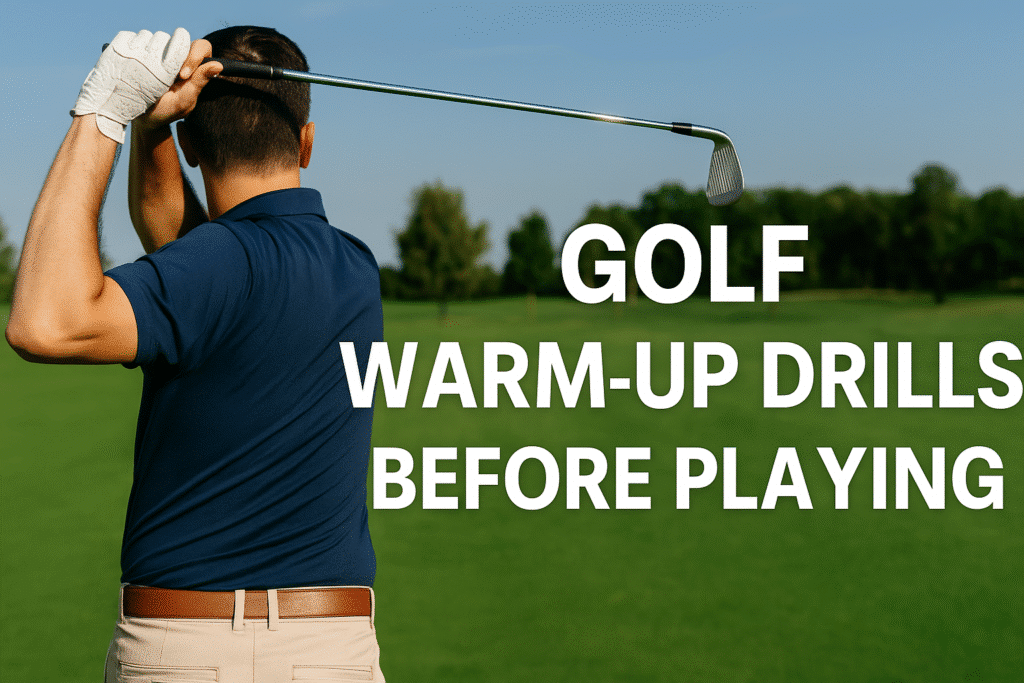
A golfer in a navy polo and beige pants performs a warm-up drill on a green golf course under a clear sky, with the text “GOLF WARM-UP DRILLS BEFORE PLAYING” displayed boldly beside him.

Golf Warm-Up Drills Before Playing: Easy Pre-Round Exercise

Discover quick golf warm-up drills you can do before tee-off to boost flexibility, power, and prevent injuries. Read tips, exercises & expert advice! Golf Warm-Up Drills Before Playing: Quick Exercises to Boost Your Game Starting a round of golf without warming up is like running a race without stretching first. You might pull a muscle or feel so stiff that your swing suffers. A brief warm-up gets your blood flowing and your muscles ready. Even a simple routine can help you hit the ball farther and more accurately. For example, dynamic moving stretches can improve your power output by up to 14%. Using targeted golf warm-up drills before playing can make you feel more flexible and in control. It also gives your mind time to focus on the routine and relax. Think of yourself as a car engine: you want to idle for a moment, not rev up when cold. Over time, this pre-round routine becomes a game-changer for your confidence and consistency. Why Warm-Up Matters Warming up is important for every golfer. It helps in several ways: Physiotherapist Fraser Perry even points out that warming up helps your joints and muscles “get familiar with specific ranges of motion” needed in golf. In other words, doing golf-like movements beforehand teaches your body the swing pattern. In short, warming up isn’t a waste of time – it’s a smart investment in your game. It can add yards off the tee, improve accuracy, and help you stay strong through all 18 holes. Even the Rockliffe Hall blog suggests spending about 10 minutes on active warm-ups (like walking and light drills) to boost your swing and protect your joints. Dynamic vs Static Stretches Not all warm-ups are equal. Golf experts stress: skip static stretches before you play. Static stretches (holding a stretch) can actually reduce your strength right before a swing. In fact, studies show static stretching can cut muscle strength by up to 28% immediately afterward. That means holding a deep hamstring or shoulder stretch might make your shots weaker. Instead, do dynamic stretching (active movements). Examples: leg swings, arm swings, walking lunges, torso twists, shoulder rolls. These exercises keep your muscles moving and warm them up. Research shows dynamic moves can boost power by about 14%. In plain terms, active stretching “wakes up” muscles without knocking out your power. Think of it like a sprinter jogging and doing high knees before a race, not standing still and touching toes. A simple tip: move into each stretch gently (no bouncing) so you loosen up safely. As one coach advises: the warm-up “has to be all dynamic” for golf. Save the deep, static holds for after your round or on rest days. Before tee-off, focus on moving exercises that mimic golf actions. That way, your body is primed and you keep all your strength for the swing. Simple Pre-Round Warm-Up Drills Try these easy golf warm-up drills anytime before your round. You don’t need fancy gear—just space and your club: Each of these drills targets a different part of your body. Together, they make sure your whole system is awake. For example, arm circles and torso twists loosen your upper body, while leg swings and lunges prime your lower body. After doing these in order, your swing should feel easier. And remember those practice swings at the end – they tie the warm-up to your actual shot-making. You can do these drills in any order that feels right. If one area is tight, spend an extra few seconds there. For instance, if your back feels stiff, do a couple more torso twists. Start slowly, then increase the range of motion as you warm up. Even doing just a few of these (like walking and arm swings) is better than none. And if space is tight, just keep moving on the spot. The important thing is to get moving, not to check every box perfectly. Pro Warm-Up Tips You don’t need special training to warm up. A few minutes of walking, stretching, and swinging will do. You could do these steps by your car in the parking lot, on the practice green, or even right on the tee box. Fresh air and sunlight might give you extra energy. The important thing is to get moving and loosen up. Quick 2-Minute Warm-Up Drills When time is really tight, try this super-fast routine. It only takes about 2 minutes: This routine was designed by a physiotherapy expert and covers all major areas quickly. Even in just two minutes, you’ll feel your hips, shoulders, and core become more active. It’s ideal for those days when you really have to hurry – better than starting completely cold. Questions Golfers Ask Q: Is hitting balls on the range enough of a warm-up?A: Hitting balls is useful, but don’t skip the drills first. After a couple of practice swings, doing some dynamic moves gets your body truly ready. Research shows that a structured warm-up can improve your drives more than just hitting balls without warming up. Think of the drills above as part of practice: do them first, then move to the ball. Q: How long should I warm up?A: Aim for 5 to 10 minutes if possible. Even 3 minutes is better than nothing. You want to feel noticeably looser than when you started. If you’re stiff or older, go toward 10 minutes. If you’re very flexible, 5 minutes of key moves might suffice. Q: What if I only have 1-2 minutes?A: Do something, even briefly. Walk a lap, do a few arm circles and leg swings, or try the quick 2-minute routine above. It won’t fully warm you up, but it’s better than nothing. Q: Do pros warm up?A: Surprisingly, some pros keep it very short. One study found that only 2 out of 25 Tour players did any running or jumping as warm-up. Many just do static swings or stretches. You can beat them by doing a short walk or jog and a few active drills.

Golf Warm-Up Drills Before Playing: Easy Pre-Round Exercise Read More »

A scenic Florida golf course at sunset with a calm water feature and manicured green, overlaid with bold white text reading "ALL-INCLUSIVE GOLF RESORTS FLORIDA" in the center of the image.

All-Inclusive Golf Resorts Florida: Top Picks & Travel Tips

Discover Florida’s best all-inclusive golf resorts. Enjoy inclusive greens fees, amenities & sunny weather for family fun. Plan your next golf vacation! All-Inclusive Golf Resorts Florida: Top Picks & Tips for Golf Players Florida is a golfer’s paradise with year-round sunshine and mild winters. It even “boasts over 1,100 golf courses” – more than any other U.S. state. These courses range from world-famous championship layouts to friendly community tracks. Between the Atlantic and Gulf coasts, you’ll find palm-lined fairways, water hazards, and dramatic sand dunes. Because of the mild weather, Florida courses stay open even in winter while much of the country is snowed in. This lets golf fans plan vacations any month of the year. In fact, many people from colder states or Canada spend their winter holidays in Florida so they can keep playing. With great courses and the option to add theme parks or beaches, Florida is hard to beat as a year-round golf getaway. Why Florida is a Top Golf Destination Florida’s warm climate and hundreds of golf courses attract players from all over the world. The state hosts over 48 million rounds of golf annually, and it’s home to the PGA Tour headquarters and the famous 17th hole at TPC Sawgrass. Many resorts combine challenging golf with vacation amenities like pools, spas, and beach access. Beginners and experts alike will find plenty of courses to match their skill level in Florida. In fact, a recent report noted that “a record 28.1 million Americans played on-course golf in 2024”, indicating the sport’s soaring popularity nationwide. This means Florida – with its warm weather and quality courses – draws a big share of golf travelers. Key reasons Florida leads in golf include: Tip: Book your golf trip in the shoulder season (late spring or early fall) to enjoy pleasant weather, avoid peak crowds, and still get lower rates. With so many courses to choose from, Florida is ideal for multi-round vacations. Whether in summer or winter, the golf courses remain open and beautifully kept. This lush scenery and ideal weather help explain why golfers of all ages return here year after year. What Exactly is an All-Inclusive Golf Resort? An all-inclusive golf resort bundles lodging, golf, and often meals into one upfront price. Most packages include daily rounds of golf at on-site courses plus breakfast or dinner each day. Some resorts even include extras like spa credits or welcome cocktails. For example, at Cheeca Lodge in the Florida Keys, the daily resort fee covers golf clubs, balls, and green fees – meaning guests can play golf without any extra charge for equipment or greens. That kind of package simplifies budgeting and scheduling so you can focus on enjoying the game. Common package components often are: Tip: Always double-check package details. Ask how many rounds are included and whether caddies, carts, or drink fees have extra charges, to avoid surprises later. All-inclusive resorts often have other perks too. Many packages include complimentary practice range balls or reserved early tee times. Resorts with lakes or oceanside settings might provide free kayaks or paddle boards for guest use. After golf, you might enjoy complimentary refreshments at a poolside bar or live entertainment without paying extra. In short, an all-inclusive deal means much of your vacation is prepaid. When comparing resorts, look at everything offered: sometimes dinner credits, free lessons, or even mini-golf sessions are part of the package. Top All-Inclusive Golf Resorts in Florida Many of Florida’s best resorts combine golf with resort-style fun. For players of all levels, these properties offer great courses plus extras like pools, spas, and on-site dining. Below are some top all inclusive golf resorts Florida you might consider: Other notable Florida golf resorts with inclusive deals include: Each of the above resorts offers an all-inclusive golf experience. Choosing one means you pre-pay most vacation costs, which can save money if you play every day. Tips: Reserve your package well in advance (4–6 months) especially if you travel during holidays. Consider staying mid-week (Mon–Thu) for lower rates and quieter courses. Planning Your Florida Golf Getaway To make the most of a golf vacation, think ahead about timing and logistics. Florida’s peak golf seasons are winter through spring, so book early if you travel then. In summer and fall, afternoon thunderstorms are common – morning tee times can beat the rain. Pack lightweight, moisture-wicking clothing, a waterproof rain jacket, and plenty of sunscreen. Bring at least two golf gloves; the humidity often causes gloves to slip, so it’s good to change midway through a round. Travel-wise, Florida is served by many airports (Orlando, Tampa, Miami, Jacksonville, etc.) making it convenient to reach your resort of choice. Renting a car is usually necessary, as courses and resorts can be spread out. Many resorts offer shuttles from airports or local attractions. Check if your resort has any “resort fee” (common in Florida) that covers Wi-Fi or other amenities; factor that into your budget. Shopping for deals can pay off. Look for combo packages that include multiple nights, rounds of golf, and dining credits. Signing up for golf or hotel newsletters can alert you to promotions. Off-season (late summer) sometimes has the lowest room rates, though courses may need aeration (so check course schedules). Use loyalty points or golf travel sites to compare packages. Tips: Always bring a refillable water bottle to stay hydrated – Florida’s sun and humidity can wear you out faster than expected. Also pack bug spray if you play early morning or late evening, especially near waterways. Download a golf course finder app or map so you can locate nearby courses on the fly. Essential Gear & Resources Even off the course, Florida resorts often feature inviting pools, spa facilities, and beachfront lounges. Between rounds you might relax by the pool or enjoy a sunny walk on the beach. Having the right gear and guides will help you enjoy every moment of your trip. Top Golf Travel Books Having one of these books (or

All-Inclusive Golf Resorts Florida: Top Picks & Travel Tips Read More »

Green Golfing Genius is your go-to resource for eco-friendly golfing tips, sustainable gear, and innovative ideas to elevate your golf game while caring for the environment. Discover a greener way to golf!

Quick Links

Recent news

  • All Post
  • Adventure place
  • Blog
  • Review
  • Road Trip

Copyright © 2025 Green Golfing Genius