
By the Green Golfing Genius team · Updated November 2026
If you’re wondering what to wear golfing in cold weather, think in three thin layers instead of one big coat: a snug moisture-wicking base layer, a light fleece or quarter-zip mid layer, and a windproof outer layer you can unzip. Add a beanie, winter golf gloves or mitts between shots, warm socks and waterproof shoes. Thin layers keep you warm without killing your swing.
Most cold-weather golf guides stop at “wear layers.” That’s not much help at 7:40 a.m. when you’re standing in the parking lot and it’s 41 degrees. So this guide gives you a temperature-by-temperature chart, a packing checklist, the mistakes that make cold rounds miserable, and what the cold actually does to your yardages. It’s built for weekend golfers, not tour pros with a heated cart.
🧥 Quick Answer: Cold-Weather Golf Outfit
- Base: snug, moisture-wicking long-sleeve top (merino or synthetic). Add thermal tights under pants below about 45°F.
- Mid: thin fleece quarter-zip or golf sweater. Skip bulky hoodies.
- Outer: wind vest or stretchy wind/rain jacket that zips off easily.
- Extras: beanie, winter golf gloves, mitts for between shots, hand warmers, warm socks, waterproof shoes.
- Expect: about 2 yards less carry with the driver for every 10°F drop.
In this guide
What Is the Best Way to Layer for Cold-Weather Golf?
Use three layers with three different jobs. The base layer moves sweat off your skin, the mid layer traps heat, and the outer layer blocks wind and light rain. Each one should be thin and stretchy enough that you can make a full turn. If you can’t rotate your shoulders freely in the parking lot, you won’t on the first tee either.
1. Base layer: stay dry first
Your base layer is the most important piece, because damp skin gets cold fast. Walking 18 holes and swinging a club makes you sweat even at 40°F. Choose a fitted long-sleeve top in merino wool or a synthetic performance fabric. Avoid cotton, which holds sweat and chills you on the back nine. Below about 45°F, add thin thermal tights or running tights under your golf pants.
2. Mid layer: trap heat without bulk
This is where most golfers go wrong. A thick cotton hoodie feels great on the range and terrible over a driver. Pick a thin fleece quarter-zip, a merino sweater or a golf pullover. If your course has a dress code, wear a collared polo as part of the base or mid layer and the quarter-zip over it.
3. Outer layer: block the wind
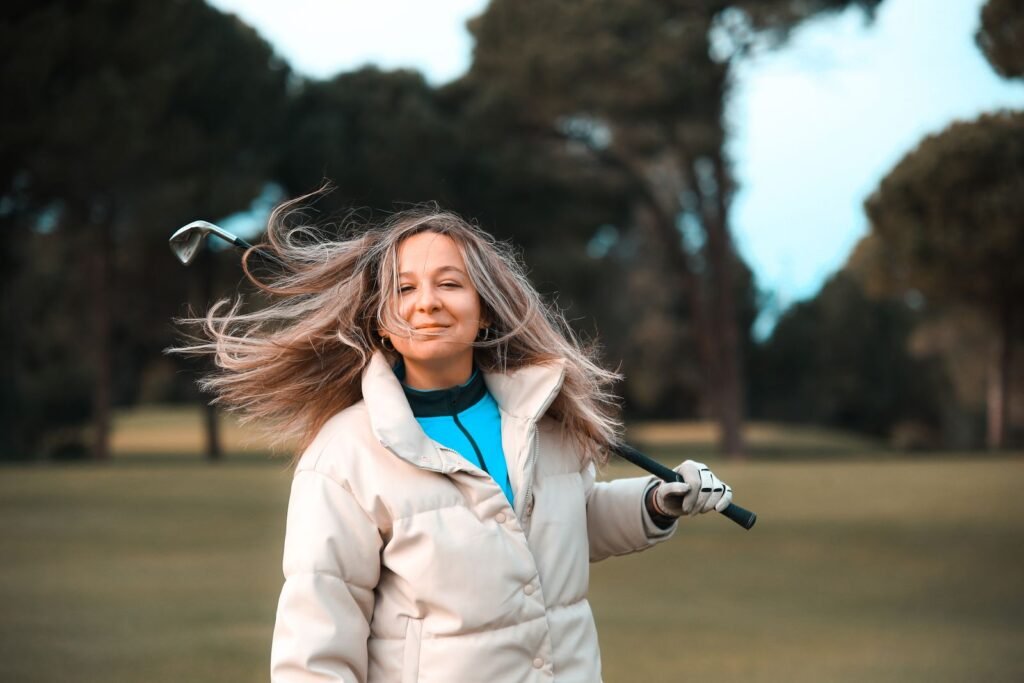
Wind is what really makes a cold round hard. A wind vest keeps your core warm while leaving your arms free. On colder or wetter days, choose a stretchy wind or rain jacket with a full zip, so you can open it on the walk and close it on the tee. Quiet fabrics are a bonus. Nobody wants a jacket that rustles at the top of the backswing.
What Should You Wear Golfing at 40, 50 and 60 Degrees?
At 60°F, a polo and a light quarter-zip are usually enough. At 50°F, add a vest or pullover. At 40°F, wear a thermal base layer top and bottom, a fleece mid layer, a wind jacket, a beanie and winter gloves. Below freezing, add mitts, hand warmers and a neck gaiter, and check the course isn’t on a frost delay.
| Temperature | Top | Bottom | Hands, head, feet | Bag extras |
|---|---|---|---|---|
| 🌤️ 60–69°F | Polo + light quarter-zip or vest | Regular golf pants | Normal glove, cap | Spare quarter-zip |
| ⛅ 50–59°F | Long-sleeve polo or thin base layer + quarter-zip or vest | Golf pants | Normal glove; beanie in the bag | Wind vest |
| 🌥️ 40–49°F | Base layer + fleece quarter-zip + wind vest or jacket | Lined or thermal golf pants, or tights underneath | Winter golf gloves, beanie, warm socks | Hand warmers, mitts |
| 🥶 32–39°F | Base layer + insulated mid layer + wind/rain jacket | Thermal tights + lined or rain pants | Winter gloves, cart mitts, beanie, neck gaiter, waterproof shoes | Thermos, spare gloves, towel |
| ❄️ Below 32°F or frost | Full layers + puffer for walking between shots | Thermal tights + rain pants | All of the above | Call the course first |
Our guide based on how golfers layer at these temperatures. Wind and sun change everything, so dress for the “feels like” temperature, not the number on your phone.
Here’s a real-world example. It’s a 9 a.m. tee time, 44°F, a 10 mph breeze, warming to 55°F by noon. Start with a base layer, a fleece quarter-zip and a wind vest, plus tights under your pants. By the 12th hole, the vest goes in the bag. By the 15th, you might be down to the quarter-zip. That’s why layers beat a single heavy jacket.
How Do You Keep Your Hands, Head and Feet Warm on the Course?
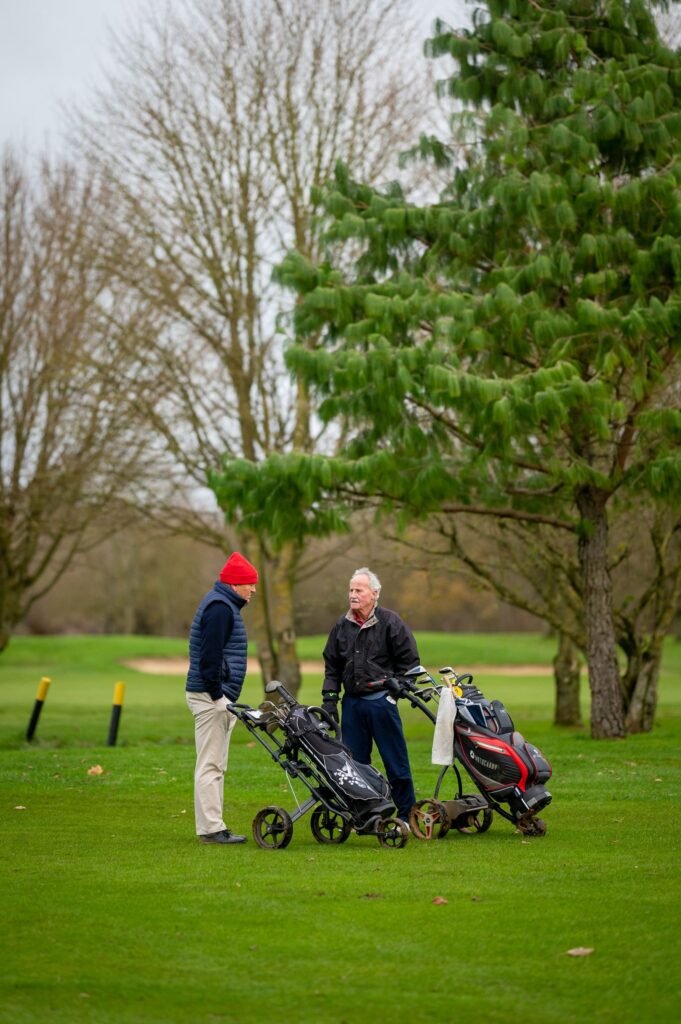
Keep your hands warm between shots, not during them. Wear winter golf gloves or pull cart mitts over your normal glove while you walk, tuck hand warmers in your pockets, and cover your head and neck. Your feet need dry, warm socks and waterproof shoes, because wet morning grass is the fastest way to cold toes.
Hands: the biggest comfort upgrade
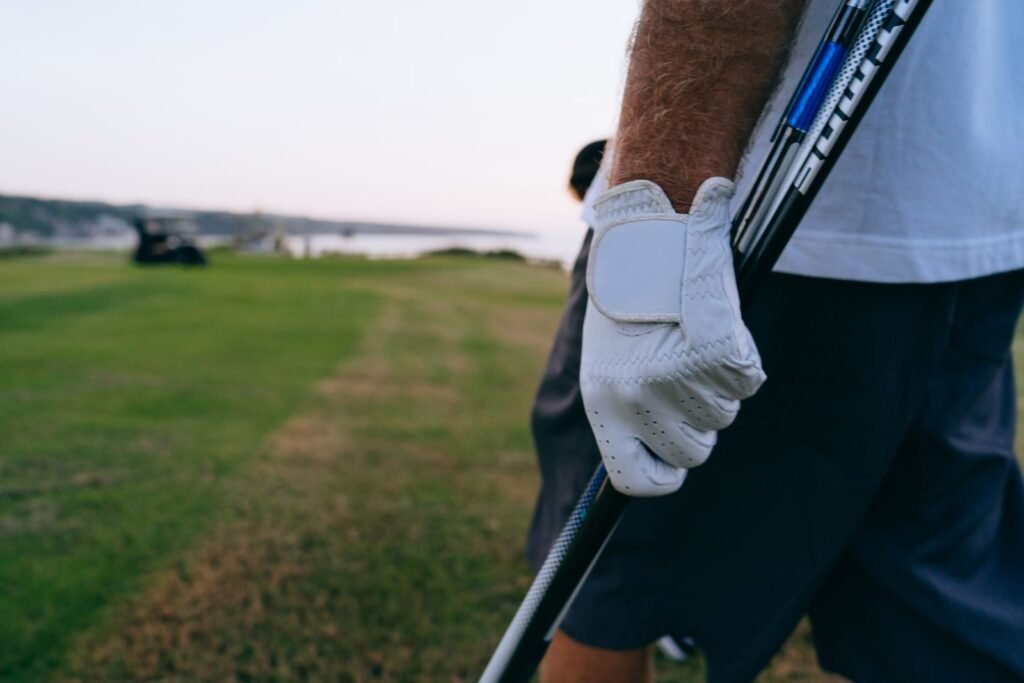
Cold hands lose feel on chips and putts first. Winter golf gloves come in pairs and are thicker than a normal glove, so many golfers wear them for full swings. Others keep their regular glove and slip on a pair of cart mitts or “hand muffs” between shots. Keep two disposable hand warmers in your pockets and rotate your hands in after every shot.
Head and neck
A beanie makes a bigger difference than most people expect. Some golfers wear it all round; others switch to a cap to putt. A thin neck gaiter blocks wind down your collar and pulls up over your ears on breezy holes.
Feet
Morning dew and frost melt soak shoes quickly. Wear waterproof golf shoes and thin merino or wool-blend socks, and don’t cram a thick sock into a tight shoe, which cuts circulation and makes your feet colder. Not sure your shoes are up to it? Our guide to choosing waterproof golf shoes explains what to look for.
How Does Cold Weather Affect Your Golf Game?
Cold air is denser, cold golf balls are less lively, and stiff muscles swing slower. In Trackman tests run by GOLF Top 100 Teacher Andrew Rice, a golfer who carries the driver about 250 yards lost roughly 2 yards for every 10°F drop, and a pitching wedge about 1.3 yards, as GOLF.com reported. Layers that restrict your turn can cost you more than that.
| Temperature | Driver carry vs 70°F (250-yard player) | Pitching wedge vs 70°F |
|---|---|---|
| 70°F | Baseline | Baseline |
| 60°F | about 2 yards shorter | about 1 yard shorter |
| 50°F | about 4 yards shorter | about 3 yards shorter |
| 40°F | about 6 yards shorter | about 4 yards shorter |
| 30°F | about 8 yards shorter | about 5 yards shorter |
Our estimate using the per-10°F figures from Andrew Rice’s Trackman tests. Slower swing speeds lose a little less in absolute yards. Wind, firm frozen ground and roll will change real results.
So on a 40-degree morning, a 150-yard 7-iron shot might need a 6-iron. Most golfers find one extra club on approach shots is about right. Warming up properly matters, too. Try our 5, 10 and 15-minute golf warm-up routines before cold rounds.
Can you warm your golf balls?
Be careful here. USGA Rule 4.2a says you must not make a stroke at a ball whose performance characteristics have been deliberately altered, and the penalty is disqualification. Deliberately heating balls during a round, for example with a hand warmer in the same pocket, can fall under that rule in a competition. The simple fix: store your balls indoors overnight instead of in a freezing car trunk, and don’t play games with heaters on the course. Softer, lower-compression balls can also feel better in the cold. Our golf ball reviews compare options by swing speed.

Why your tee time may be pushed back
On frosty mornings, many courses delay tee times. According to the USGA, walking on frosted grass makes ice crystals puncture the plant cells, and the damage shows up in footprints days later, especially on greens. A foursome makes several hundred steps on each green. So call ahead, don’t book the first tee time of the day in winter, and use the extra time for a longer warm-up.
Know when it’s too cold
Wind chill matters more than the thermometer. The National Weather Service notes that at 0°F with a 15 mph wind, the wind chill is -19°F and exposed skin can freeze in 30 minutes. Most golfers will never play in that, but numb fingers, shivering you can’t stop or slurred speech in a playing partner are all signs to head to the clubhouse.
Cold-Weather Golf Bag Checklist
Pack this the night before so you’re not hunting for gloves at 7 a.m.
- ☐ Beanie and a cap for putting
- ☐ Winter golf gloves or cart mitts, plus a spare dry glove in a zip bag
- ☐ 4 disposable hand warmers (2 for now, 2 for the back nine)
- ☐ Neck gaiter
- ☐ Wind vest or packable wind jacket
- ☐ Rain pants if the forecast shows showers
- ☐ Thermos of something warm (and water; you still dehydrate in the cold)
- ☐ Two towels: one for clubs, one dry one for hands
- ☐ Lip balm and sunscreen (winter sun still burns)
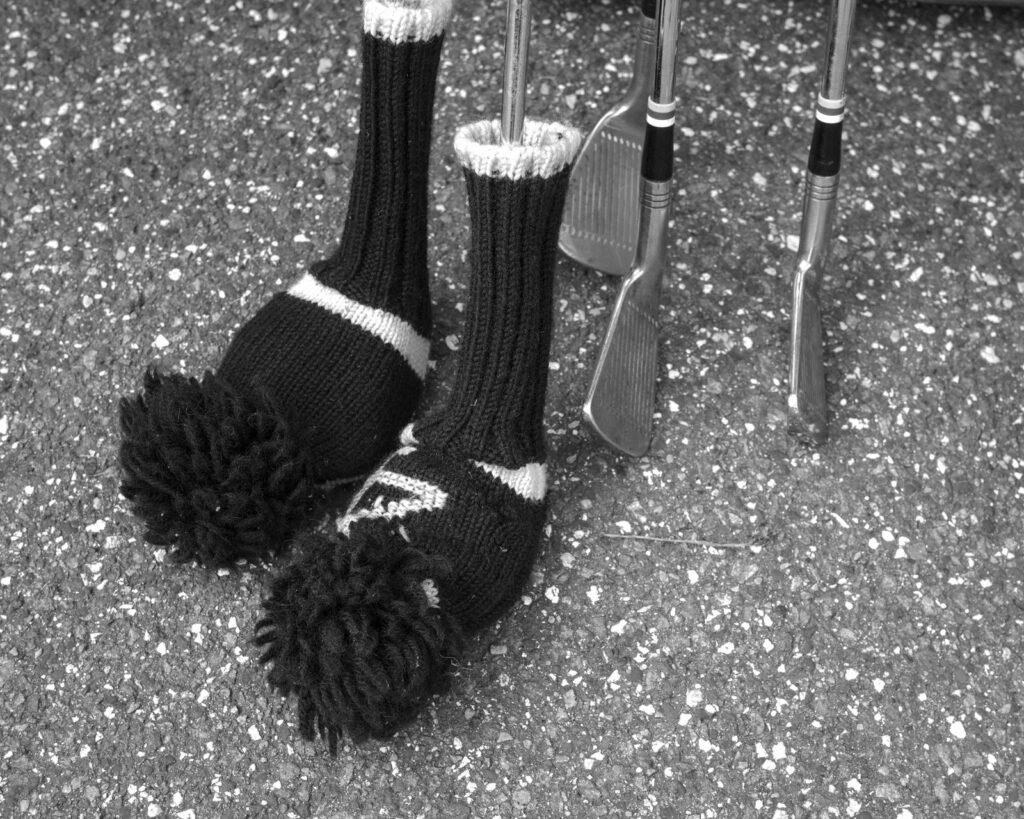
- ☐ Head covers on your woods and a cover for your putter
- ☐ An umbrella for wet days. See our best golf umbrellas for wind and rain.
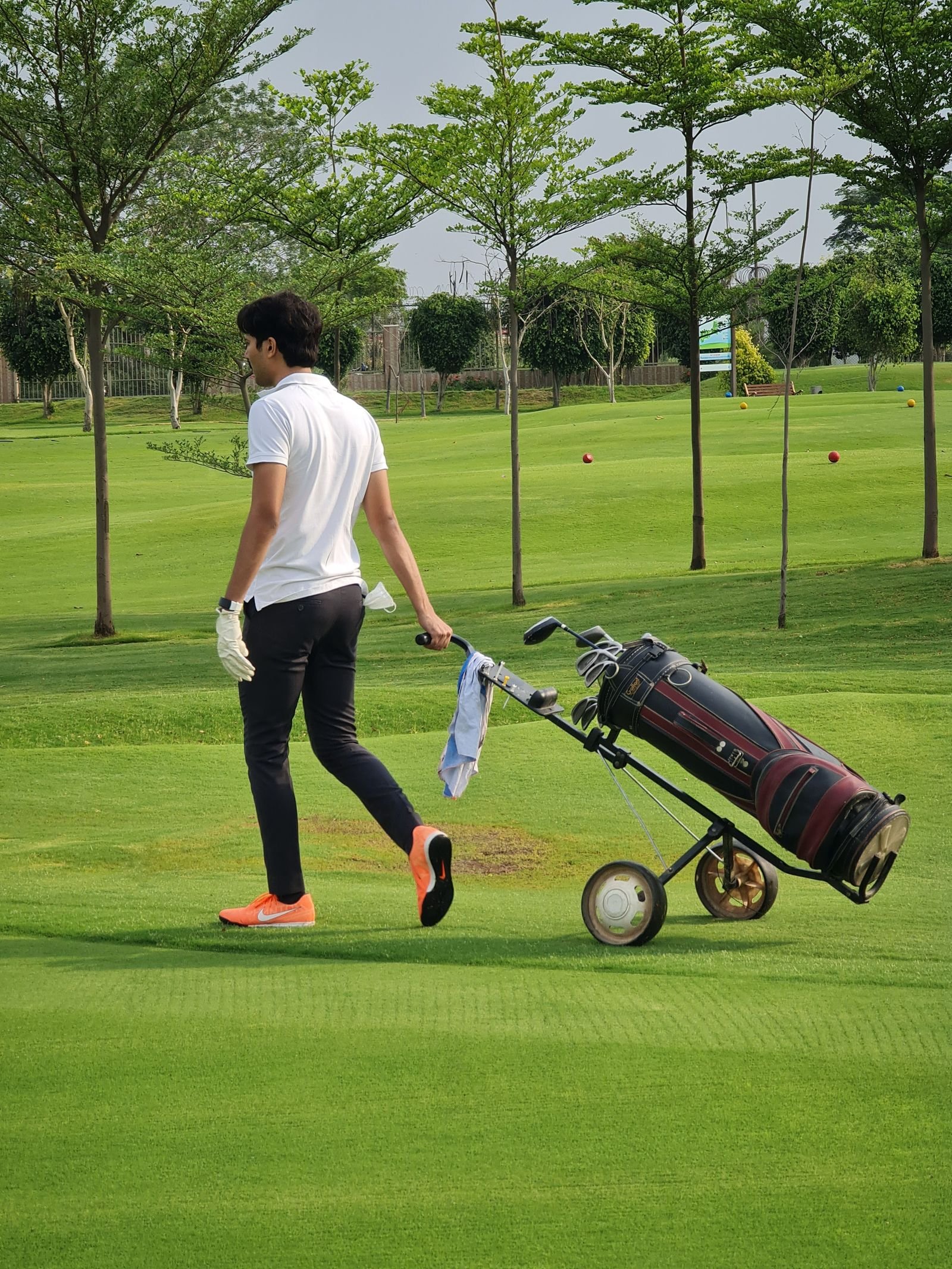
Walking instead of riding? A push cart keeps the extra layers off your shoulders. Compare options in push cart vs carry bag vs golf cart.
Cold-Weather Golf Mistakes to Avoid
- Wearing one big coat. You’ll overheat on the walk and freeze on the tee. Layers let you adjust every few holes.
- Cotton next to your skin. It soaks up sweat and turns cold. Use merino or synthetic.
- Bulky sleeves. Puffy arms change your swing. Choose vests or slim-fit jackets.
- Ignoring your hands until the 5th hole. Warm them from the first tee. Once they’re numb, they’re hard to warm up.
- Playing summer yardages. Take about one more club on approach shots below 50°F.
- Skipping the warm-up. Cold muscles swing slower and strain more easily.
- Booking the first tee time. Frost delays push early times back. Mid-morning is usually warmer anyway.
If it’s simply too cold or the course is closed, you can still keep your swing sharp. Our plan for practicing golf at home in winter has drills for any room size.
Frequently Asked Questions
What should I wear golfing at 40 degrees?
At 40°F, wear a snug moisture-wicking base layer, a thin fleece quarter-zip, and a wind vest or jacket. Add thermal tights under your golf pants, a beanie, winter golf gloves or mitts between shots, warm socks and waterproof shoes. Carry hand warmers.
What should I wear golfing at 50 degrees?
At 50°F, a long-sleeve polo or thin base layer with a quarter-zip or vest is usually enough, with regular golf pants. Keep a beanie and a wind layer in your bag in case the wind picks up or clouds roll in.
Is it OK to wear a hoodie golfing?
Many casual courses allow golf hoodies, but some private clubs don’t, so check the dress code. Choose a thin, stretchy golf hoodie over a thick cotton one. Bulky hoodies restrict your turn and hold sweat.
How much distance do you lose golfing in cold weather?
In Trackman tests by teacher Andrew Rice, a golfer carrying the driver about 250 yards lost about 2 yards per 10°F drop, and a pitching wedge about 1.3 yards. Stiffer layers and slower swing speed can add to that.
Can you use hand warmers on the golf course?
Yes, keeping your hands warm with hand warmers is fine. What you must avoid is deliberately heating golf balls during a round, which can breach USGA Rule 4.2a. Keep warmers and balls in separate pockets.
How cold is too cold to play golf?
There’s no single number. Many golfers stop around freezing, especially with wind. Watch the wind chill, frost delays and how your body feels. Numbness, shivering you can’t stop or confusion are signs to get indoors.
The Bottom Line
What to wear golfing in cold weather comes down to three thin layers, warm hands, a covered head and dry feet. Match your outfit to the chart, do the parking lot turn test, take an extra club below 50°F and pack hand warmers. Do that, and a crisp winter round on an empty course can be one of the best golf days of the year.
Keep learning: more winter golf guides from Green Golfing Genius
- How to practice golf at home in winter
- Golf warm-up routine: 5, 10 and 15-minute plans
- Gifts for golfers who have everything
Sources: USGA Rules of Golf, Rule 4.2a; USGA Course Care on frost delays; National Weather Service wind chill chart; GOLF.com on Andrew Rice’s cold-weather Trackman tests. Updated November 2026.
What’s the coldest round you’ve ever played? Tell us what you wore in the comments.