Green fees rose 29% since 2019 — but so did inflation, at 27%. The real annual cost of golf by play frequency, with NGF data and honest math.
What Golf Really Costs Per Year: The 2026 Numbers
Golf’s reputation as an expensive sport is both earned and overstated, and the data on which is which has gotten considerably better recently. The National Golf Foundation’s April 2026 analysis found public green fees rose about 29 percent between 2019 and 2025 — a real increase that golfers noticed. Over the same period, general US inflation rose about 27 percent.
In other words, golf got more expensive at almost exactly the rate everything else did. By comparison, NGF notes the cost of attending an NFL game rose around 50 percent over the same six years, and movie ticket prices jumped roughly 60 to 75 percent depending on the measure used.
This article breaks down what golf actually costs annually at different play frequencies, where the money goes, how sharply it varies by state and course type, which cost-reduction strategies produce real savings, and where the published averages are misleading.
The Headline Numbers
| Metric | Figure | Source |
| Average 18-hole public/daily-fee green fee | ~$41 | NGF, April 2026 |
| Average public 18-hole fee including discounts | ~$37 | NGF (excluding resorts) |
| National average weekday rate (course-level tracking) | $51 | GreenFeeTracker, 9,342+ courses |
| Green fee increase, 2019–2025 | ~29% | NGF |
| US inflation, same period | ~27% | NGF comparison |
| Golf participation growth, 2019–2025 | +41%, nearing 50 million participants | NGF |
Why Published Averages Differ So Much
The $37, $41, and $51 figures above all describe “the average green fee” and differ by nearly 40 percent. This is worth understanding rather than glossing over.
NGF tracks published peak-time fees, which are not always what golfers actually pay — discounting for twilight rounds, replays, local resident rates, and seasonality is widespread. When discounts are accounted for, NGF’s figure drops to around $37. GreenFeeTracker’s $51 reflects confirmed weekday rack rates across 210 markets, which captures a different slice.
| The practical takeaway on averages No single average describes what you will pay. Published rack rates overstate typical spending because discounting is pervasive; discount-adjusted averages understate peak weekend costs. Your own number depends on when you play, where, and whether you book at rack rate or through discount channels. |
Annual Cost by Play Frequency
This is the number most golfers actually want. Figures below cover the all-in round cost — green fee plus cart where applicable — and exclude equipment purchases, lessons, and membership dues.
| Play Frequency | Rounds per Year | Estimated Annual Spend |
| Occasional (monthly) | ~12 | $500–$900 |
| Twice monthly | ~24 | $1,700–$3,100 |
| Weekly | ~52 | $4,000–$7,000 |
| Twice weekly | ~104 | $8,000–$14,000 |
The spread within each row reflects course selection more than anything else. A weekly golfer playing municipal courses at $30 to $40 including cart lands near the bottom; one playing daily-fee courses at $70 to $90 on weekends lands near the top — same number of rounds, roughly double the cost.
Where the Money Goes
Green Fees and Cart Fees
Green fees dominate ongoing cost. Cart fees are the line item rising fastest: green fees rose an average of 4.2 percent in 2025 — the slowest annual increase since 2019 — while cart fees climbed 7.8 percent, driven by battery replacement costs and labor shortages.
Walking instead of riding saves between $25 and $150 per round depending on the course, which makes it the single most effective ongoing cost reduction available to a golfer who is physically able to walk.
Weekday Versus Weekend
Weekend rates typically run $10 to $30 higher than weekday rates at most public courses. The gap is widest at resort and daily-fee tracks, where weekend rates can be 30 to 50 percent above weekday pricing. Municipal courses often charge the same rate both days, which is part of why they represent such good value for frequent players.
Equipment
Equipment is front-loaded rather than recurring. A complete new starter set including a bag typically costs around $400, which makes the entry barrier lower than most non-golfers assume.
For replacement clubs, certified pre-owned programs offer meaningful savings: a driver retailing at $549 commonly runs around $329 certified pre-owned with warranty transfer — roughly 40 percent off for equipment two to three years old that performs at or near current-model levels.
Lessons
Frequently treated as optional and arguably shouldn’t be. Research cited in NGF materials found players investing in four to six focused lessons in their first three months cut average round scores by around 12 strokes within six months and retained interest at nearly double the rate of those who did not.
The retention finding matters financially: a golfer who quits after one season has spent money on equipment that produces no further value. Lessons that keep someone playing convert a sunk equipment cost into an ongoing hobby.
State and Regional Variation
Location is the largest cost variable outside play frequency. GreenFeeTracker data across 210 markets in 49 states puts the national average weekday rate at $51, with Illinois lowest at a $34 state average.
The spread is substantial: resort destinations in states like Oklahoma and Nevada can run $150 or more on peak days, while municipal courses in the Midwest and South regularly offer rounds under $25.
Regionally, the least expensive golf is concentrated in the Midwest and South. Resort golf has diverged most sharply from local golf — average resort green fees climbed about 37 percent since 2019, notably above the 29 percent public-course increase, and more than half of US golf resorts now carry peak-season rates above $100.
The Resort Pricing Caveat
Resort pricing is dynamic, with discounts tied to seasonality, time of day, replay rounds, and local or resident rates. In sunbelt states like Florida and Arizona, the spread between peak-season and off-peak summer pricing can be very wide when temperatures climb. A resort course at $180 in February may be $65 in July.
Memberships: When the Math Works
Private club membership is the largest potential cost in golf. Average initiation fees now exceed $12,000, with monthly dues ranging from $425 to $1,100 — annual dues of $3,000 to over $10,000 before initiation.
For most golfers this is not a relevant option, but the middle ground has expanded. Semi-private and daily-fee clubs increasingly offer “associate” or “social-plus-golf” memberships at $1,895 to $3,450 per year, typically including unlimited practice facility access and priority booking windows.
The Break-Even Calculation
At a representative $2,650 annual associate membership — about $221 per month — a player averaging two rounds per week saves $1,400 or more annually on green fees alone based on regional median rates.
| Rounds per Year | Pay-per-round cost @ $45 | $2,650 Membership | Better Option |
| 20 | $900 | $2,650 | Pay per round |
| 40 | $1,800 | $2,650 | Pay per round |
| 60 | $2,700 | $2,650 | Roughly break-even |
| 80 | $3,600 | $2,650 | Membership |
| 104 | $4,680 | $2,650 | Membership — saves $2,030 |
The break-even sits near 60 rounds per year at typical pricing. Below that, membership costs more than pay-per-round. The honest caveat that clubs rarely mention: members frequently play more after joining, which improves the per-round economics but increases total annual spending — the membership pays off per round while costing more overall.
Municipal Season Passes
An underused middle option. Municipal course annual passes run roughly $295 to $520 for unlimited or heavily discounted play. For a golfer within reach of a decent municipal course, this is frequently the best value available anywhere in golf and breaks even in as few as eight to twelve rounds.
Ten Ways to Reduce Annual Golf Cost
Ranked by savings relative to effort.
1. Walk Instead of Riding
Saves $25 to $150 per round. For a weekly golfer, that is $1,300 to $7,800 annually — the largest single lever available, with fitness benefits attached.
2. Play Twilight Rounds
Twilight discounts typically run 25 to 40 percent off, commonly after 2 p.m. For anyone with schedule flexibility, this is close to free money — the same course, same condition, materially lower price.
3. Buy a Municipal Season Pass
At $295 to $520 for unlimited or discounted play, breaks even in roughly eight to twelve rounds. The best value in golf for anyone near a municipal course.
4. Shift to Weekday Play
Saves $10 to $30 per round at most public courses, and 30 to 50 percent at resort and daily-fee tracks. Municipal courses often charge the same rate regardless, so check first.
5. Buy Certified Pre-Owned Equipment
Roughly 40 to 60 percent off retail for clubs two to three years old, with warranty transfer on major programs. Performance difference from current models is marginal for most amateurs.
6. Play Off-Peak Seasonally
In sunbelt states, summer rates at resort courses can be a fraction of peak-season pricing. In northern states, shoulder-season rates in spring and late fall are substantially below summer.
7. Take Lessons Early
Counterintuitive as a cost-saving measure, but four to six lessons in the first three months roughly doubles retention rates. The golfer who quits has wasted the equipment spend entirely.
8. Use Discount Booking Platforms
Tee time platforms regularly list unsold inventory below rack rate, particularly midweek and in shoulder hours. Because discounting is already pervasive, paying rack rate is often a choice rather than a requirement.
9. Play Nine Instead of Eighteen
Roughly half the cost for a meaningful share of the experience, and substantially easier to fit into a weekday. For a golfer whose alternative is not playing at all, nine holes is the better economic comparison.
10. Buy Golf Balls in Bulk or Refinished
A small line item individually but continuous. For higher-handicap players losing several balls per round, premium balls are a poor value proposition — the performance difference is not recoverable at that skill level.
The Costs Golfers Forget to Count
Green fees dominate the conversation because they are the visible number. Several other categories accumulate quietly and are frequently missing from a golfer’s mental budget.
| Cost | Typical Annual Amount | Notes |
| Practice range balls | $150–$400 | Often paid per bucket and rarely tracked |
| Golf balls lost | $80–$300 | Scales sharply with handicap |
| Gloves | $40–$120 | Wear out every 15–25 rounds with regular play |
| Shoes | $60–$200 amortized | Replaced every 2–3 seasons with regular use |
| Apparel | $100–$400 | Higher where courses enforce dress codes |
| Tips (caddie, bag drop, cart staff) | $50–$300 | Varies by course type and region |
| Food and drink at the course | $200–$800 | Frequently the largest forgotten category |
| Travel and fuel to courses | $150–$500 | Meaningful for golfers driving to preferred courses |
On-Course Food and Drink Deserves Specific Attention
For many regular golfers this quietly rivals equipment spending. A beverage cart purchase and a post-round meal at $25 to $35 across 40 rounds is $1,000 to $1,400 a year — potentially more than the golfer spends on clubs across several seasons.
This is not an argument against it; the social element is a large part of why people play. But a golfer who believes their annual cost is $2,000 and has never counted the clubhouse tab is likely closer to $3,000, and knowing that changes which savings actually matter.
Handicap and Association Fees
Maintaining an official handicap index through a state or regional golf association typically costs $30 to $60 annually. Modest, but worth including for completeness — and genuinely worthwhile for anyone who plays competitively or wants to track improvement reliably.
Golf for Beginners: The First-Year Number
First-year cost differs substantially from ongoing cost because equipment and instruction are front-loaded — the same pattern seen in most hobbies.
| Category | First-Year Cost | Notes |
| Starter club set with bag | ~$400 | New; less with certified pre-owned |
| Shoes | $60–$120 | Optional initially — athletic shoes work at many public courses |
| Four to six lessons | $200–$600 | Highest-value spend in the first year |
| Green fees (24 rounds, mostly nine holes) | $600–$1,000 | Nine-hole rounds are the sensible starting point |
| Balls, gloves, tees | $100–$200 | Expect higher ball loss early |
| FIRST-YEAR TOTAL | $1,360–$2,320 | Roughly $700–$1,200 of it one-time |
The honest advice for a beginner is to rent or borrow clubs for the first three to five rounds before buying anything. A meaningful share of people who try golf do not continue, and a $400 starter set that sits in a garage is the single most common wasted expense in the sport.
Is Golf Actually Expensive? A Fair Comparison
Context helps here, and NGF’s own framing is reasonable: at roughly $41 for an 18-hole round, golf delivers four-plus hours outdoors with exercise, mental challenge, and social time.
| Activity | Approximate Cost | Duration | Cost per Hour |
| 18 holes public golf | ~$41 | 4–4.5 hours | ~$9–$10 |
| Movie ticket | ~$13 | 2 hours | ~$6.50 |
| NFL game ticket | $100+ | 3 hours | $33+ |
| Concert ticket | $80–$150+ | 2–3 hours | $27–$75 |
| Gym membership (monthly) | $40–$60 | Unlimited | Varies by use |
On a cost-per-hour basis, public golf compares favorably with most ticketed entertainment. It compares less favorably with activities that are free or near-free — running, hiking, pickup sports — which is the honest counterpoint. Golf is reasonably priced entertainment; it is not a cheap way to exercise.
Where the Cost Complaint Is Legitimate
NGF’s national averages tell a measured story, but aggregate pictures have limits. Golfers in high-demand metro markets, those who prefer weekend morning tee times, and those drawn to destination golf have experienced increases well above the national average — resort fees up 37 percent, with over half of resorts now above $100 peak.
Participation growth of 41 percent since 2019, to nearly 50 million participants, has given operators unprecedented pricing power after a decade of oversupply that suppressed rates. The complaint that desirable tee times have become harder and more expensive to get is accurate even though the national average has only tracked inflation.
A Realistic Annual Budget
Weekly golfer, public courses, walking most rounds, one equipment replacement:
| Category | Annual Cost |
| Green fees (52 rounds, mixed weekday/weekend, walking) | $2,080 |
| Cart fees (12 rounds where walking not permitted) | $240 |
| Golf balls and consumables | $180 |
| One certified pre-owned club replacement | $329 |
| Two lessons | $180 |
| Range balls / practice | $200 |
| TOTAL | $3,209 |
Roughly $62 per round all-in for a weekly golfer making sensible choices. The same golfer riding every round at weekend daily-fee rates could comfortably exceed $7,000 — the difference is entirely in walking, timing, and course selection rather than in playing less.
Conclusion
Golf costs most recreational players $1,700 to $3,100 annually at twice-monthly play and $4,000 to $7,000 at weekly play, built on an average public green fee of roughly $37 to $41 after discounting. Green fees rose 29 percent between 2019 and 2025 against 27 percent general inflation — a real increase, but one that tracked the cost of living rather than outpacing it, and well below the roughly 50 percent rise in NFL ticket prices or 60 percent-plus rise in movie tickets over the same period.
The cost is more controllable than most golfers treat it as. Walking rather than riding saves $25 to $150 per round. Twilight rates run 25 to 40 percent below peak. A municipal season pass at $295 to $520 breaks even in under a dozen rounds. Any one of these produces larger savings than playing less.
Where the complaint about rising costs holds up is at the top of the market — resort green fees up 37 percent, with over half of US resorts now above $100 at peak — and in high-demand metro markets where 41 percent participation growth has given operators real pricing power. Local public golf, which is where most rounds are actually played, has stayed roughly where inflation put it.
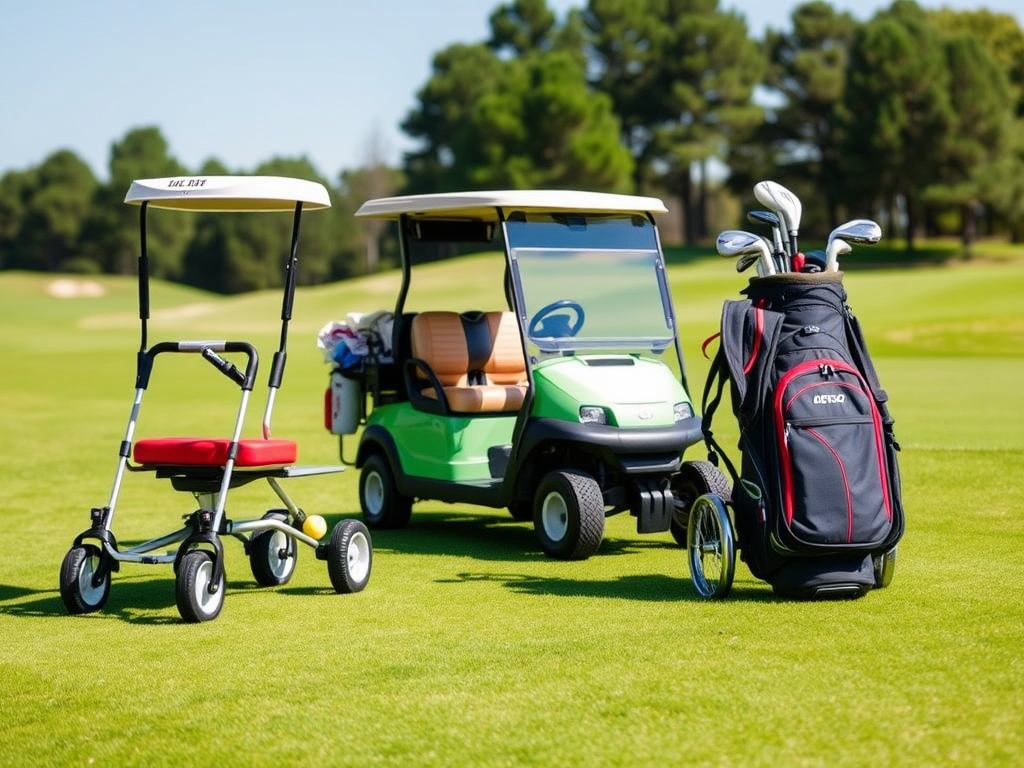
For more golf guides, equipment comparisons, course recommendations, and game improvement content, visit Green Golfing Genius. Our comparison of push carts, riding carts, and carry bags covers the walking decision that drives most of the savings above. [Internal link: link to your push cart comparison and golf statistics articles]
Frequently Asked Questions
How much does the average round of golf cost in 2026?
The National Golf Foundation puts the average 18-hole public or daily-fee green fee at roughly $41, or about $37 when discounts are accounted for and resorts excluded. Course-level tracking across 9,342 courses puts the national average weekday rate at $51 at rack rate, with Illinois lowest at a $34 state average.
How much does golf cost per year?
Roughly $500 to $900 for monthly play, $1,700 to $3,100 for twice-monthly, and $4,000 to $7,000 for weekly play. These cover green and cart fees only — equipment, lessons, and membership dues are additional.
Has golf gotten more expensive?
Yes, but in line with everything else. NGF data shows public green fees up about 29 percent between 2019 and 2025 against about 27 percent general inflation. Over the same period NFL game attendance costs rose around 50 percent and movie tickets 60 percent or more. Resort golf is the exception, up about 37 percent.
Is a golf membership worth it?
It depends almost entirely on how often you play. At a representative $2,650 annual associate membership against $45 per round, break-even sits near 60 rounds a year. Below that, pay-per-round is cheaper. Private club membership — initiation fees now averaging over $12,000 plus $425 to $1,100 monthly dues — is a lifestyle decision rather than a cost-saving one.
What is the cheapest way to play golf regularly?
A municipal course season pass at $295 to $520 for unlimited or heavily discounted play, combined with walking rather than riding. That combination breaks even in eight to twelve rounds and eliminates the fastest-rising cost line — cart fees rose 7.8 percent in 2025 against 4.2 percent for green fees.
How much does a beginner golf set cost?
A complete new starter set including a bag typically costs around $400, which is a lower entry barrier than most people assume. Certified pre-owned options reduce this further, and many courses rent clubs for a first few rounds before committing.
Do golf lessons save money in the long run?
Indirectly, yes. Research cited by NGF found players taking four to six focused lessons in their first three months cut average scores by about 12 strokes within six months and retained interest at nearly double the rate. A golfer who quits after one season has spent on equipment that produces no further value.
Why are cart fees rising faster than green fees?
Battery replacement costs and labor shortages. Cart fees climbed 7.8 percent in 2025 against 4.2 percent for green fees — the slowest green fee increase since 2019. This widening gap strengthens the financial case for walking.