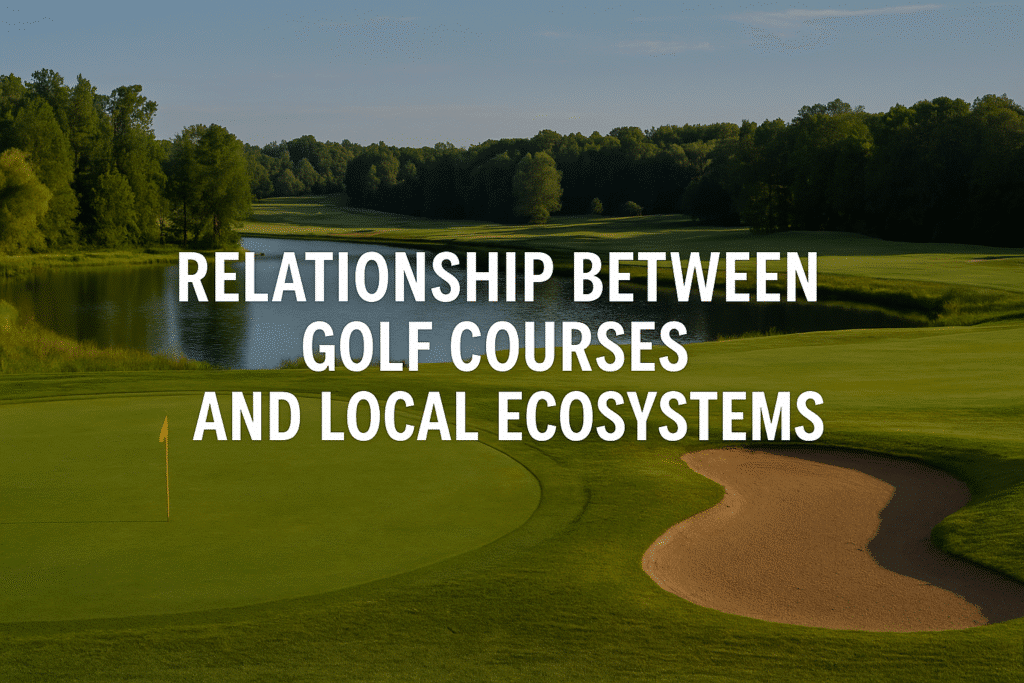
Discover how golf courses and local ecosystems affect one another. Learn 10 key relationships – from wildlife habitats and water use to sustainability – explained in simple terms.
Golf Courses and Local Ecosystems – 10 Ways, They Impact Each Other
When you picture a golf course, you might imagine neatly cut grass, sand bunkers, and ponds. But did you know a golf course is also part of the local ecosystem? In fact, the relationship between golf courses and local ecosystems can be surprising. Golf courses aren’t just places to play – they can provide homes for wildlife, use lots of water, and even affect the soil and air around them. In this article, we’ll explore 10 key ways golf courses interact with nature. Each section is written in a friendly, easy tone so that even a 7th-grader can understand. Let’s tee off and learn how golf and nature are connected!
1. Golf Courses as Wildlife Habitat
Golf courses often serve as green spaces where animals can live. Many courses have trees, bushes, and ponds that attract birds, insects, and small mammals. Fairways and rough areas can become home to creatures like birds, rabbits, or even deer. For example, some golf courses leave sections of land unmoved (not cut short) so wildflowers can grow, and bees and butterflies have food. In urban areas, a golf course might be one of the only big green habitats for wildlife. According to the USGA, golf courses provide important habitats for native wildlife and can even support threatened species. This means a well-managed course can act like a park or nature reserve for local animals.

Deer grazing on a quiet golf course. Golf courses can provide a refuge for wildlife like deer, especially in early mornings or evenings when the course is calmer. Animals often find food, water, and shelter on golf course grounds, showing a positive side of the relationship between golf courses and local ecosystems.
Tip: If you’re golfing and see wildlife, give them space. Enjoy watching them from a distance. This keeps both you and the animals safe.
2. Impact on Local Plant Life (Flora)
The grass on a golf course isn’t always native to the area. Courses sometimes plant special turfgrass that needs regular care. On the plus side, all that grass and landscaping means a lot of plants doing good things: plants produce oxygen, provide shade, and prevent erosion (stopping soil from washing away). Trees on a course can create cooling shade and homes for birds. However, if a golf course replaces native plants with non-native grass, it might reduce biodiversity (variety of plants). Ideally, courses use a mix of native trees and plants in their landscaping, which keeps the ecosystem healthier. Some golf courses even keep wild areas or gardens with native flowers to support bees and other pollinators. Using native plants means less need for water and chemicals, because these plants are adapted to the local environment. In short, the plants on a golf course can either help or hurt the local ecosystem depending on how they’re chosen and managed.
3. Water Use: Thirsty Greens and Water Conservation
Golf courses need water – a lot of it – to keep the grass green. How much water do golf courses use? In dry regions, you might see sprinklers running often. All U.S. golf courses combined use about 1.5 billion gallons of water per dayusga.org, which is roughly 0.5% of the country’s daily water useusga.org. That sounds huge, and in some areas it can strain (use up) local water supplies. Courses often draw water from wells, rivers, or recycled wastewater to irrigate (water) the turf. The good news is many golf courses are finding ways to save water, such as watering only at night to reduce evaporation and using smart computer systems to water only when needed. Drought-resistant grass varieties and rainwater storage ponds are other tools for water conservation. In fact, water use on U.S. courses dropped about 29% from 2005 to 2020 thanks to these effortsusga.org. The relationship with local water systems is delicate: too much water use can hurt rivers and lakes, but careful management can minimize the impact.
A serene pond alongside a golf course at sunset. Water hazards and ponds on golf courses aren’t just for challenging play – they’re often part of the local watershed. These ponds can catch and filter rainwater runoff, helping to manage storm floods and provide habitat for fish, frogs, and birds. Some golf course ponds even become homes for ducks and turtles, blending the course into the local ecosystem.
Tip: Golfers can help save water by not overwatering practice greens at home and supporting courses that use recycled or reclaimed water for irrigation.
4. Chemical Use: Fertilizers and Pesticides
To keep golf courses looking perfect, groundskeepers use chemicals like fertilizers (to help grass grow) and pesticides (to kill weeds, insects, or fungi). While these chemicals make the course pretty and playable, they can pose risks to the local ecosystem. If it rains, excess fertilizer can wash off into nearby streams or ponds, causing algae blooms (too much algae growth) that harm fish and water quality. Pesticides can also runoff or seep into groundwater. Environmental groups warn that many golf courses store a “toxic assortment” of chemicals that can drift in the air, seep into ground water, and even hurt local wildlife. These chemicals might even affect people (like golfers or maintenance workers) if not handled carefully.
On the bright side, many courses are adopting safer practices. Some are switching to organic fertilizers or Integrated Pest Management (IPM), which means using natural methods first and chemicals only as a last resort. Courses are also very regulated – in the U.S., many pesticides can only be applied by trained, licensed staffusga.org. Plus, modern golf turf is often designed to absorb chemicals better. Research has shown that healthy turfgrass with deep roots can trap and break down chemicals, limiting how much ends up escaping into the environmentusga.org. The key is balance: using fewer chemicals and more nature-friendly techniques keeps the golf course healthy without poisoning the local ecosystem.
Tip: Some golf courses are going organic! If you’re concerned, look for courses that advertise eco-friendly maintenance. You can also ask your local course if they participate in environmental programs or certifications.
5. Soil Health and Runoff
The way a golf course is built and maintained affects the soil and water runoff. Golf fairways and greens are often designed with drainage in mind. Proper drainage systems (like hidden pipes and sandy soils) help prevent large puddles on the course. However, when heavy rain hits, water can run off the course carrying fertilizers or soil into nearby streams. Well-maintained courses can actually help filter water: as water soaks through healthy turf and soil, a lot of impurities get filtered out before reaching groundwater. Turfgrass has thick roots and acts like a sponge, reducing soil erosion and filtering surface runoffusga.orgusga.org. That’s a benefit for the local ecosystem – it can mean cleaner water and less flooding downstream.
If a course is poorly managed (for example, too much bare ground or compacted soil), runoff can be a problem, carrying pollution into rivers. Some courses add buffer zones of plants around waterways to trap sediment and nutrients. Overall, a golf course can be either a filter or a source of runoff pollution, depending on its design. Engineers and superintendents work hard to make sure it’s the former, using things like retention ponds and vegetative swales (shallow channels with plants) to manage stormwater.
6. Biodiversity: Variety of Species on the Course
Believe it or not, a golf course can host a wide variety of species. If you walk quietly, you might spot frogs in the ponds, fish like minnows or bass, many kinds of birds (from ducks and geese to hawks or owls), and sometimes even foxes or coyotes trotting across in the early morning. Birds, especially, benefit from golf courses. A recent U.S. Fish & Wildlife Service story highlighted that many clubs are creating bird-friendly habitats, turning unused rough areas into natural sanctuariesfws.gov. Birds use golf courses as stopover sites during migration and find food and nesting spots on the grounds. For instance, swallows may nest under eaves of a clubhouse, or egrets may wade in the course ponds. Some courses install bird houses or bat boxes to encourage wildlife that also help control pests (bats and birds eat mosquitoes and insects!).
However, biodiversity can suffer if a course is too intensively managed (meaning every inch is trimmed and sprayed). The healthiest scenario is when a course keeps some wild areas – maybe a patch of forest, a meadow, or a wetland section. Many modern golf courses set aside areas for nature, creating a mosaic of habitats. In these mixed environments, you might see turtles sunning by a lake, hear frogs croaking at dusk, and see butterflies fluttering near flower beds. The relationship here is mostly positive: the course offers homes for animals, and the animals add beauty and interest to the course.
7. Land Use and Landscape Changes
When a new golf course is built, it changes the landscape significantly. Sometimes golf courses replace farmland, sometimes they replace forests or deserts. This land use change has big impacts. If a course is built on former wild land, it can fragment habitat – meaning animals that used to roam freely now have to navigate fairways and human activity. For example, building a course in a forest might displace species that need deep woods. On the other hand, building a course on an old abandoned field or a former landfill can improve the land by adding grass, trees, and ponds where there was little nature before.
It’s interesting that golf courses take up a relatively small portion of land overall. In the United States, all the golf courses together cover less than 0.1% of U.S. land areausga.org. So they’re a small piece of the big picture, but locally they make a noticeable difference. In many towns, the golf course might be one of the largest green areas. That can be a good thing in urban or suburban settings, providing scenic beauty and open space instead of more buildings. However, in sensitive areas (like a coastal dune or a rare prairie), putting a golf course could harm an ecosystem. Every location is different. The key point: golf courses need careful planning to fit into the local environment in a gentle way. Some regions famous for golf, like Myrtle Beach with its many courses, have learned to balance development with preserving natural coastal habitats (our blog’s guide to the best golf courses in Myrtle Beach touches on the area’s scenic courses by the sea). Planning and smart design help ensure the golf course and ecosystem can coexist.
8. Climate and Air Quality Effects
Green plants, like the grass and trees on golf courses, play a role in the climate and air quality around them. Grass and trees absorb carbon dioxide and release oxygen – basically cleaning the air. The vegetation on a golf course can sequester carbon (store carbon from the air) and improve air qualityusga.org, especially in cities. Large stretches of turf also have a cooling effect. On a hot day, a park or golf course will usually feel cooler than the asphalt parking lots or roads around it. This can help reduce the “urban heat island” effect in cities, where built-up areas get much hotter than natural areas.
Of course, maintaining a golf course has a carbon footprint too. Lawn mowers, leaf blowers, and golf carts emit exhaust (unless electric). Many courses are transitioning to electric golf carts and electric maintenance equipment to cut down on pollution. Some even have solar panels on clubhouses or use renewable energy for operations. Overall, a well-kept golf course is like a little oasis that can cool and clean the local air – but the management practices determine if it’s truly eco-friendly. If they use renewable energy and efficient electric tools, the climate impact stays low while the natural benefits stay high.
9. Golf Course Management and Eco-Friendly Practices
The way people manage a golf course makes a huge difference in its relationship with the ecosystem. There are environmental programs that help golf courses go green. For instance, the Audubon Cooperative Sanctuary Program (ACSP) for golf courses guides clubs on how to protect nature on their property. Courses in this program work to improve wildlife habitat, reduce chemical use, conserve water, and educate the community. Many courses proudly become “Certified Audubon Sanctuaries,” which means they met certain environmental goals. This is a win-win: the course gets prestige and the local ecosystem gets some extra care and protection.
Eco-friendly practices include things like:
- Using recycled water or rainwater for irrigation instead of fresh potable water.
- Planting native species in the roughs and around edges, so they need less upkeep and provide food for wildlife.
- Creating buffer zones around streams with tall grasses or wetland plants to filter runoff.
- Setting aside “no-mow” zones where nature can grow wild.
- Using solar-powered golf carts or electric maintenance equipment to cut down on emissions.
Even simple steps help. For example, leaving grass clippings on the lawn to act as natural fertilizer, or scheduling mowing at times that won’t disturb nesting birds. Many golf courses are realizing that being eco-friendly not only helps nature but can save money in the long run (less water and chemical use saves costs). Golf course superintendents today often see themselves as stewards of the land, not just groundskeepers.
Tip: As a golfer, you can do your part by not littering on the course. Even better, consider using reusable tees or biodegradable golf tees. Little actions add up to a healthier environment on and off the course!
10. Balancing Recreation and Conservation
Finally, it all comes down to balance. Golf courses exist for people to enjoy the sport, but they also sit in the middle of communities and natural areas that need care. The relationship between golf courses and local ecosystems is a balancing act between recreation and conservation. A golf course that’s open to the public provides fun, exercise, and economic benefits to the community. At the same time, that course can offer environmental benefits if managed wisely – or environmental problems if neglected.
The good news is that more and more golf courses are embracing an approach of “sustainable golf.” This means they actively try to reduce waste, protect wildlife, and maintain the course in a way that doesn’t harm the planet. It’s not perfect everywhere, but there are great examples around the world of courses that co-exist with nature. Some courses in desert areas, for example, only irrigate the greens and let the fairways be more natural and brown in dry seasons, saving water. Coastal courses might work with environmental groups to protect beach dunes and marine life.
In the end, golf courses and ecosystems influence each other. A healthy local ecosystem makes the golf course more beautiful and enjoyable (nobody likes a polluted pond or dead trees on the fairway). And a thoughtfully managed golf course can give back to the ecosystem by preserving green space and providing a haven for wildlife in an otherwise developed area. By understanding these relationships, golfers and course managers can make choices that benefit everyone – people and nature alike.
Side-by-Side Comparison: Golf Course Impacts on Ecosystems
To wrap up, here’s a simple side-by-side look at some key factors and how golf courses can bring benefits or challenges to local ecosystems:
| Factor | Positive Impact (Benefit) | Negative Impact (Challenge) |
|---|---|---|
| Wildlife Habitat | Provides green space and shelter for many species; native areas on courses support birds and small animalsusga.org. | Can replace or fragment natural habitats if built on wilderness; disturbance from golfers and machines can scare wildlife. |
| Water Management | Courses can include ponds/wetlands that catch rain and recharge groundwater, helping flood controlusga.org. | High water use for irrigation can strain local water supply; runoff can carry fertilizers into rivers if not controlled. |
| Plants & Biodiversity | Planting native trees and flowers boosts local biodiversity and pollinators; green plants cool and clean the air. | Use of non-native grass can reduce plant variety; intensive landscaping may eliminate natural plant communities. |
| Chemicals (Pesticides) | When used sparingly and properly, modern turf and soils can absorb chemicals with minimal leachingusga.org. | Overuse of fertilizers and pesticides can pollute waterways and soil, and harm wildlife and humansbeyondpesticides.org. |
| Soil Health | Deep-rooted turf prevents erosion and filters water, improving water quality downstream. | Soil can become compacted by heavy machinery, reducing its health; chemical buildup may affect soil organisms. |
| Climate & Air | Grass and trees capture carbon and produce oxygen, cooling urban areas and improving air qualityusga.org. | Maintenance equipment (mowers, carts) can emit CO₂ and pollutants unless electric; removing trees for fairways reduces shade. |
| Economic & Social | Provides recreation and jobs, which can encourage investment in green space and conservation projects. | If not managed sustainably, can become exclusive areas using resources without regard for the broader community needs. |
| Sustainability Efforts | Many courses adopt eco-friendly practices (recycled water, solar energy, Audubon certification) that benefit nature. | Without such efforts, courses can waste resources and contribute to problems like water shortages or habitat loss. |
| Stormwater Runoff | Good course design (vegetated buffers, retention ponds) slows runoff and filters nutrientsusga.org, protecting local creeks. | Poor design can lead to fertilizer and sediment washing into streams, causing algae blooms and harming fishglobalcoral.org. |
| Open Space Value | Acts as green open space in urban areas, similar to a park – scenic landscapes that people and wildlife both enjoy. | In sensitive natural areas, a golf course can be an intrusion that alters a once-pristine ecosystem (e.g., a wetland or dune). |
Conclusion
Golf courses and local ecosystems share a complex relationship. We’ve seen that golf courses can offer environmental benefits – like providing habitats, filtering water, and maintaining green space – especially when they’re designed and managed with nature in mind. We’ve also learned that golf courses can pose environmental challenges, such as heavy water use and chemical runoff, if not handled responsibly. The key is balance. Today, many golf courses strive to be good neighbors to the environment by adopting sustainable practices and even partnering with wildlife organizations.
Please visit Green Golfing Genius for getting more golf related blogs and products.
For golfers and nature-lovers alike, it’s encouraging to know that golf and nature don’t have to be enemies. With careful management, a golf course can be a place where the love of sport and love of nature meet. Next time you tee off, take a moment to appreciate the birds singing in the trees or the dragonflies zipping over the pond – those are signs of a local ecosystem at work on the golf course. By respecting and protecting these natural features, we ensure that golf courses remain beautiful places for play and part of a healthy environment for future generations.